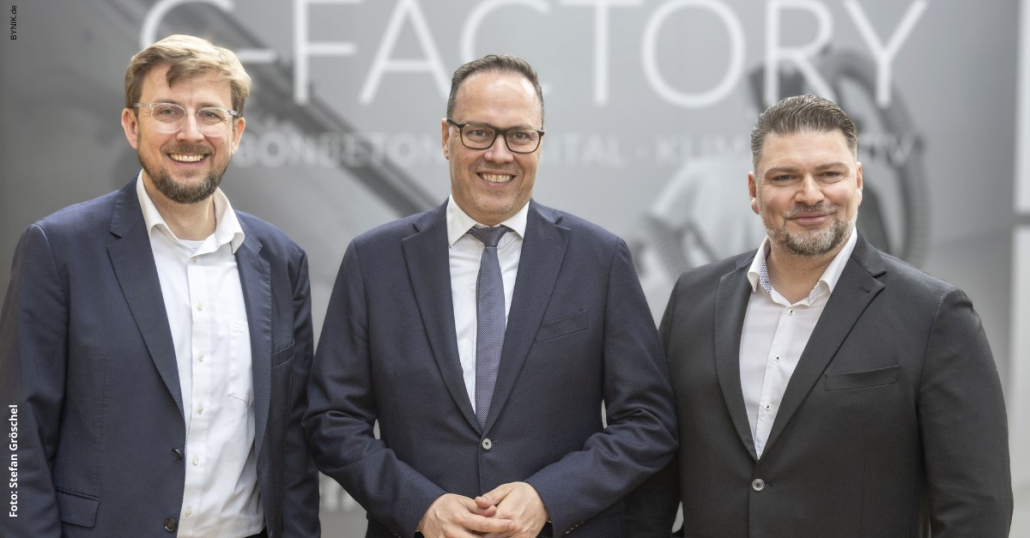
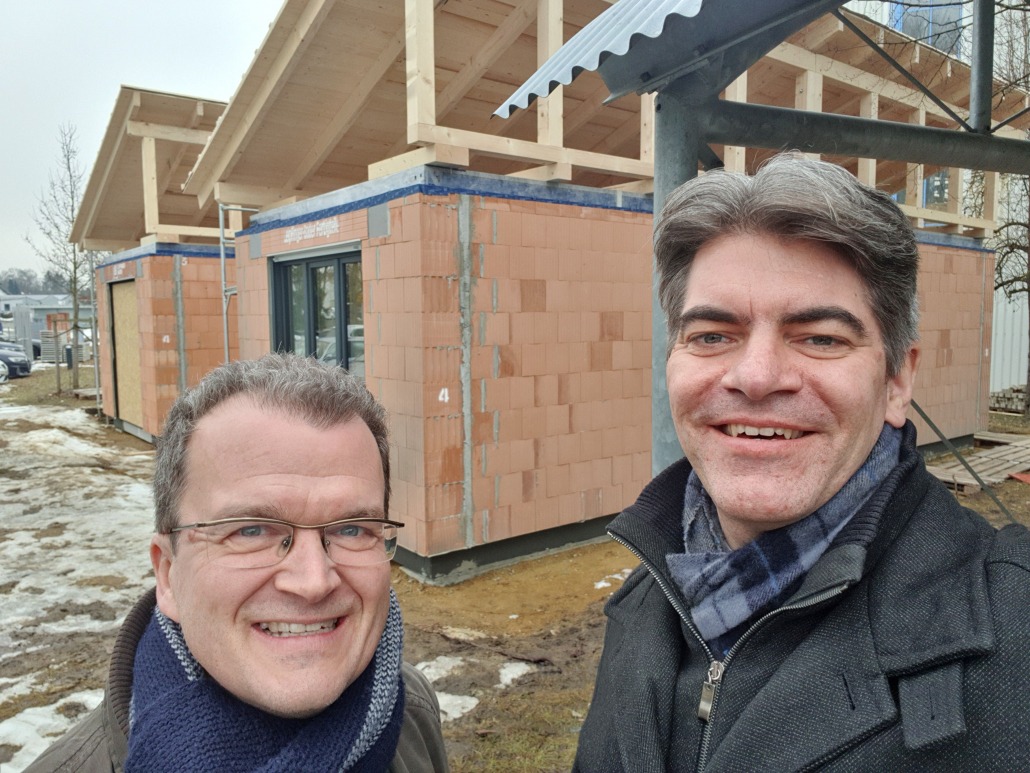
Last week Marc and Dirk took part in the joint Winter Workshop of the EASI ZERo and INBUILT Projects at the Leipfinger-Bader site in Pfeffenhausen close to Munich. It was an important milestone for the aerogel-it team.
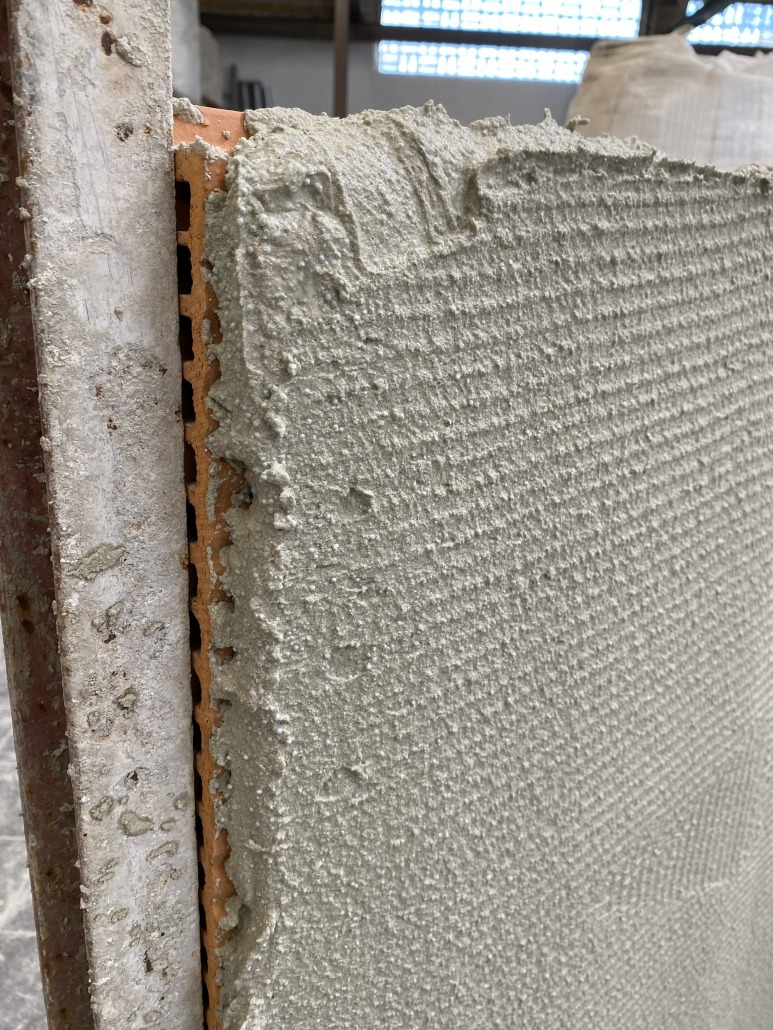
The main focus for the team was aerogel insulation render. This product class is becoming one of the more important aerogel applications. This is because it brings benefits for energetic renovation of the old European building stock, especially heritage buildings. There is a huge amount of buildings that need to be energetically renovated.
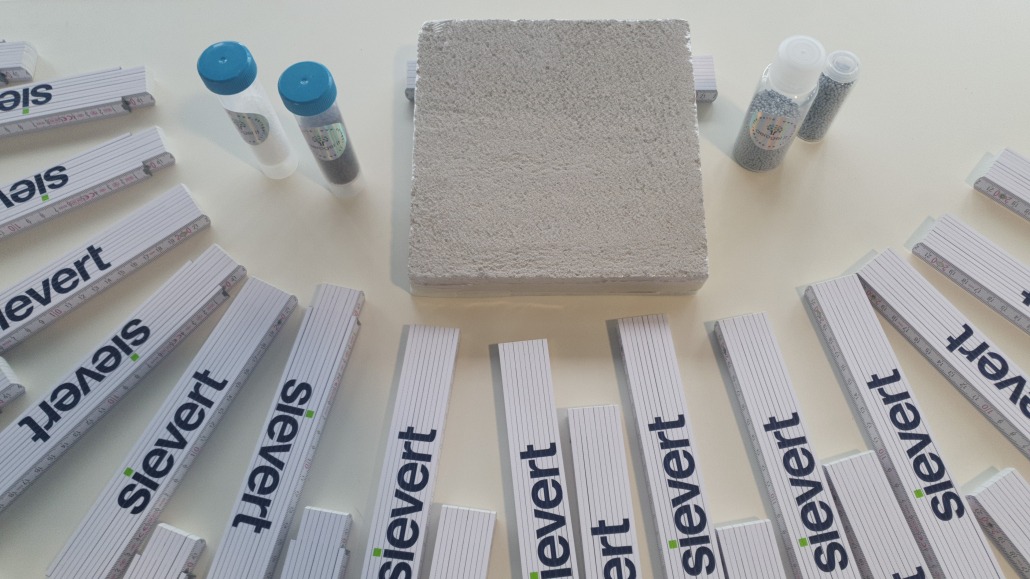
Large-scale testing including an EOTA wall and showcase prefab modules had been done as part of the EASI ZERo project e.g. by Juergen Frick of University of Stuttgart. We had provided pilot quantities of our next-generation biomineral silica aerogel. The Sievert SE team around Dr. Tina Oertel and Franziska Endres then used our material to develop an aerogel render formulation. And the results the project team obtained with our aerogel were positive – which of course made the aerogel-it team very happy.
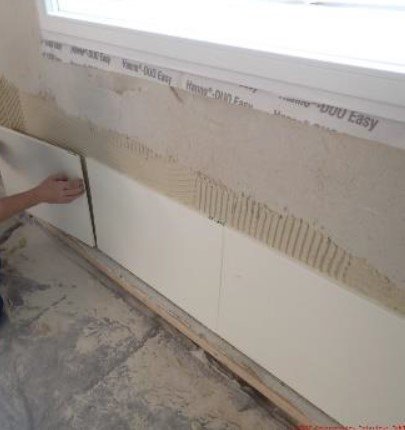
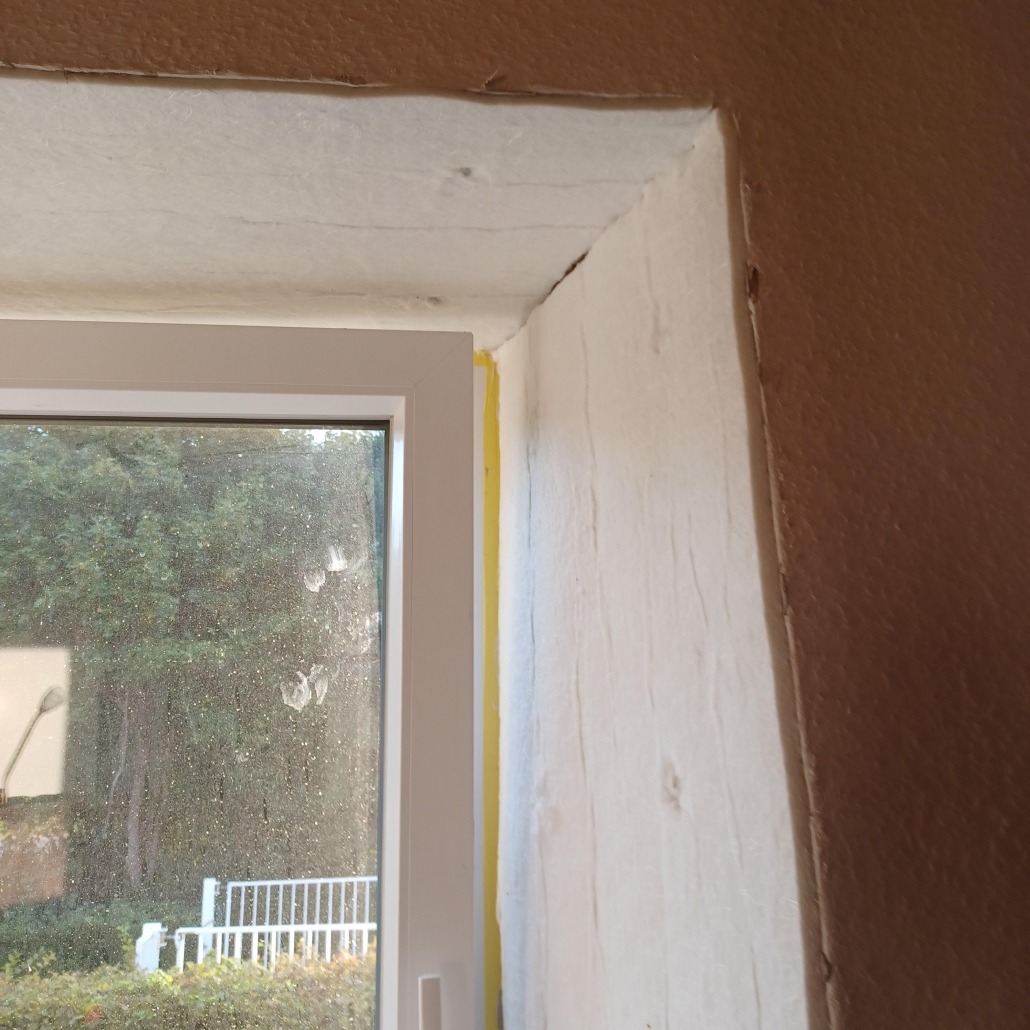
Plus, it was the first time that the team could actually see and touch the materials. The aerogel insulation render formed part of two impressive showcase modules that had been built at the Leipfinger-Bader site as part of the project (see photo).
A big thank you to the Sievert team for inviting the aerogel-it team to the meeting. It has been a great collaboration.
Visiting Leipfinger-Bader
Also, a big thank you to the Leipfinger-Bader team around Simon Eibl and colleagues for being such great hosts. We were shown around the manufacturing areas of window shutter cases and new clay interior panels. Especially for manufacturing of clay panels, the team had done an impressive job of setting up a first production. These panels are an exciting product with lots of intelligent details. The newly developed prefab living modules were also very interesting to see. The modules are fast to move and install for quick and easy setup of living and office spaces.
Osnabrück very present
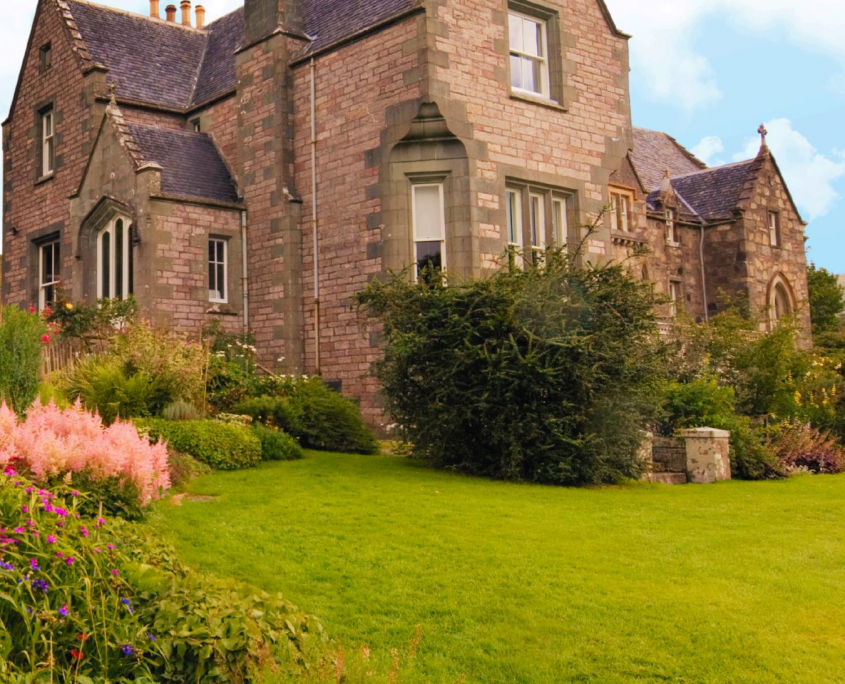
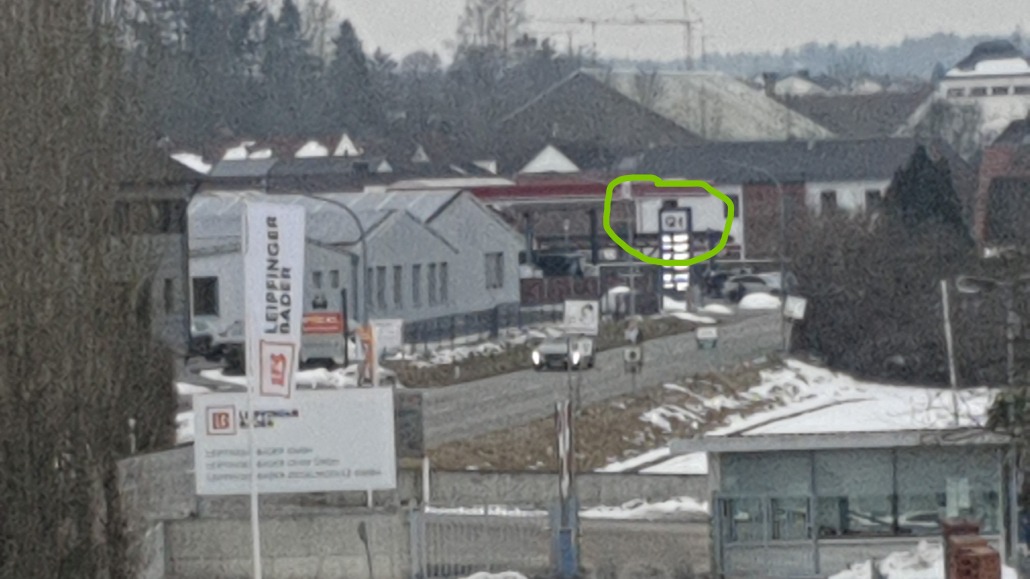
Funny detail: Three institutions from Osnabrück were present in and around the meeting: Sievert, aerogel-it – and right across the road and well visible from the meeting room was a gas station of Q1 Energie AG (see photo). The team certainly did not expect to see so much Osnabrück concentrated in far-away Pfeffenhausen in Bavaria.
Sievert EasiZero aerogel insulation render sample with aerogel-it materialThe showcase modules of the EasiZero and Inbuilt projectsQ1 next to Leipfinger-Bader in Pfeffenhausen
https://aerogel-it.de/wp-content/uploads/2026/02/Sievert-and-aerogel-it-teams-at-Winter-Workshop-EasiZero-and-Inbuilt.jpg18901890dirk.weinrichhttps://aerogel-it.de/wp-content/uploads/2025/01/thumbnail_aero_white_transp-300x232.pngdirk.weinrich2026-02-09 11:35:122026-02-09 11:35:13Successful test in aerogel insulation render within EASI ZERo project
https://aerogel-it.de/wp-content/uploads/2025/01/thumbnail_aero_white_transp-300x232.png00nik.thoernerhttps://aerogel-it.de/wp-content/uploads/2025/01/thumbnail_aero_white_transp-300x232.pngnik.thoerner2026-01-26 11:14:012026-01-27 11:18:11Launch of new format “Ask Dr. Marc”
The climate change as well as surging energy prices create a pressing trend towards more energy efficiency in buildings to lower carbon dioxide emissions and energy consumption for heating and cooling. While essential from the sustainability point of view, the drive towards more energy efficiency has a well visible and undesirable impact on building aesthetics: Walls need to become increasingly thicker since layers of thermal insulation material such as mineral wool, expanded polystyrene or polyurethane foam need to keep up with the ever stricter energy-efficiency requirements. There is only so much performance available from these well-established thermal insulation materials.
This translates to ever thicker insulation layers and walls. However, as a downside, the resulting building designs become heavier in appearance. Windows become deeper and restrict the outside view. Altogether, an unpleasant, cumbersome aesthetic sensation is created.
Aerogels – space-saving thermal superinsulation
Aerogels are a high-performance alternative to conventional thermal insulation. Currently, these materials are used where space matters most. Usually two aspects are relevant in construction:
Where existing buildings require energetic renovation to improve energy efficiency, often little space is available for thermal insulation e.g. on the inner side of exterior walls, in wall cavities or beneath floors. Strongly limited space benefits from the highest possible performance of aerogels – to maximize energy efficiency.
For new building projects, the higher performance of aerogels enables slimmer wall construction. This conserves valuable useable space in the building. While using aerogels seems expensive at first, the use of these high-performance products pays off in many cases. The additional space the slimmer wall design creates leads to additional revenue that can cover the cost of the aerogel materials and more, which makes the decision on using aerogel materials economically attractive to investors.
But a third aspect is often overlooked: Aerogels also enable new possibilities in terms of building aesthetics, since much more lightweight building designs become possible. Construction no longer needs to be heavyweight to be energy efficient.
The Triesch Residence and the Problem
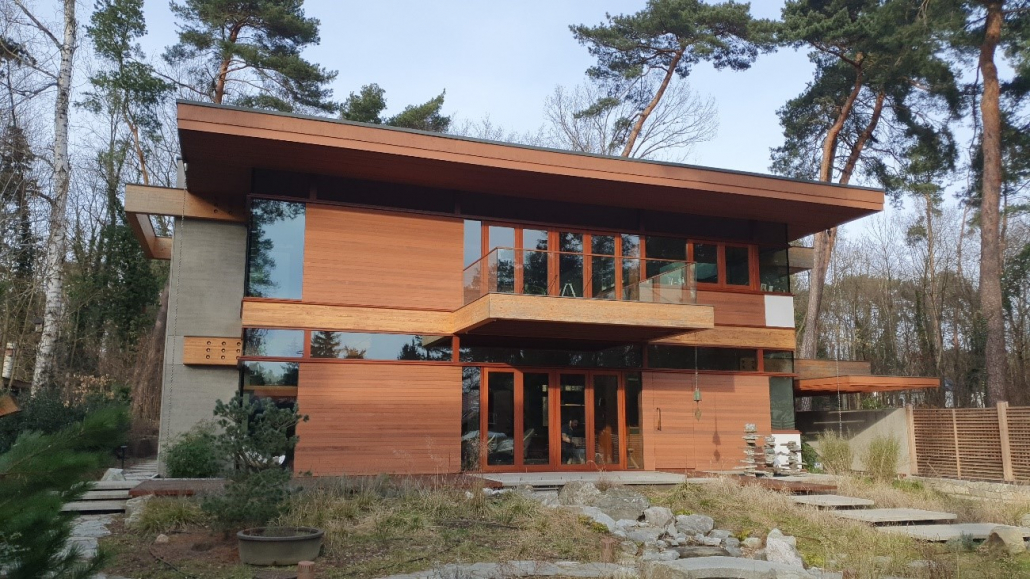
The Triesch Residence (photo: Dirk Weinrich)
This has been impressively achieved with the Triesch Residence in Berlin. When furniture expert Lars Triesch decided to translate the beautiful building design of architect Ray Kappe from California to Berlin, he was confronted with a dilemma: For the original building in the United States with its breathtaking lightweight design based on redwood and concrete no thermal insulation had been used. The more extreme Berlin climate would not allow such an approach, less so since current energy efficiency standards were to be met within the project.
Aerogels make it possible
Happily, Triesch found a potential solution when learning about aerogel materials and the pioneering work of chemical company BASF in this space. He contacted Dr. Marc Fricke, now CEO of aerogel-it GmbH and at the time BASF business development manager for aerogel materials. Dr. Fricke was immediately convinced that aerogels were the key solution for the Triesch building design and brought architect and aerogel construction experts Dr. Alexander Kahnt and Matthias Tietze of Kahnt & Tietze GmbH into the project. Together, the team re-designed the original details of the Ray Kappe building. They incorporated aerogels into the building envelope to achieve the desired energy efficiency performance of the building while maintaining the original lightweight appearance of the Kappe design:
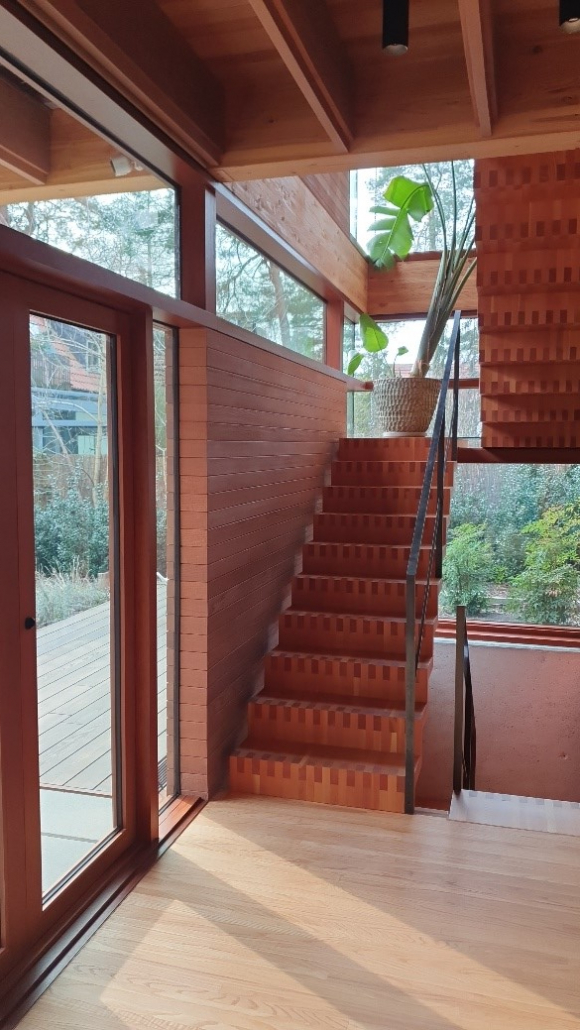
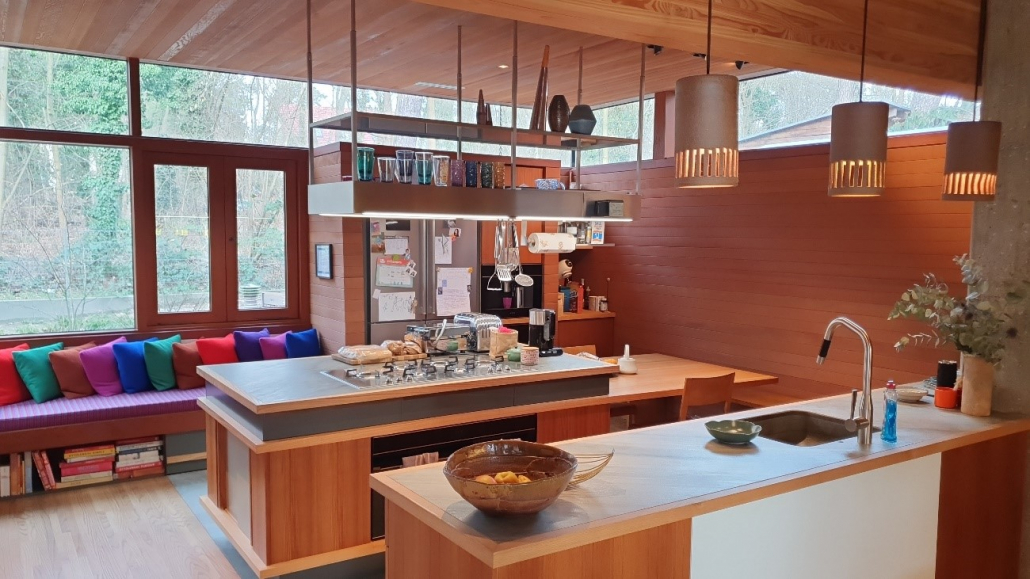
The redwood wall elements and pillars were re-designed as cassettes of a slim redwood envelope enclosing an aerogel-containing thermal-insulation layer.
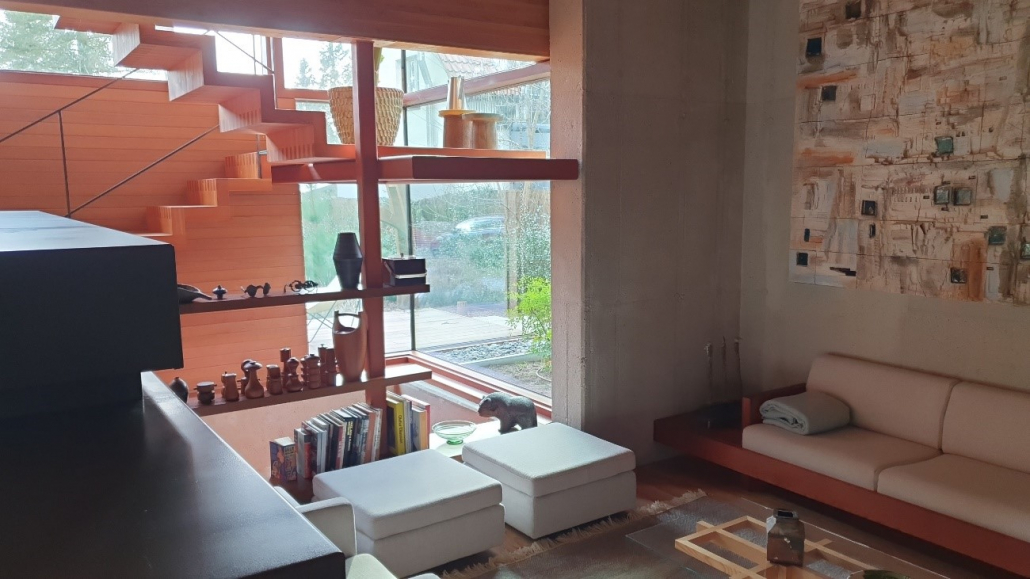
The massive, steel-reinforced concrete elements were re-designed as slim carbon-reinforced, prefabricated concrete sandwich elements with a central aerogel-containing thermal-insulation layer.
Keeping the original slim construction was only possible due to the excellent performance of the space-saving aerogel materials. The result was extraordinary and the building iconic. Compared to conventional construction with standard thermal insulation, the wall thickness was reduced to around 20 cm with aerogel insulation as opposed to 30-40 cm. The slim walls had a huge impact on building aesthetics. The benefits became visible after successful completion of the construction project: The Kappe design retained its aesthetic appeal in the new building in Berlin.
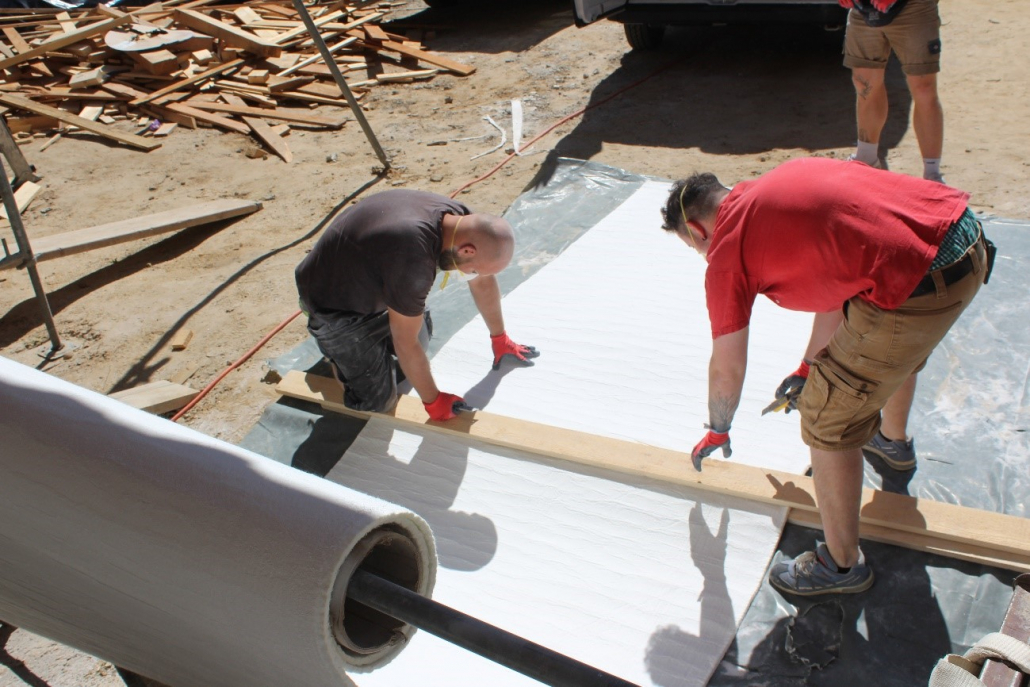
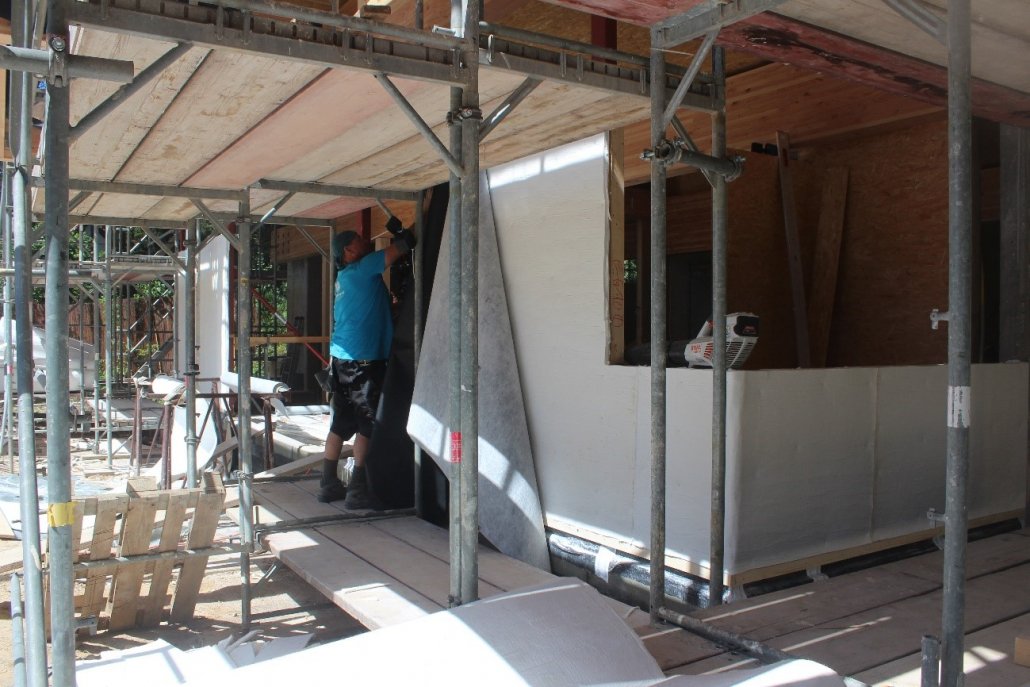
Aerogel superinsulation is cut to the desired shape by the construction team on site (photo: HTWK Leipzig).Aerogel superinsulation is applied to the wooden structure of the Triesch residence (photo: HTWK Leipzig).
The project team visits three years later
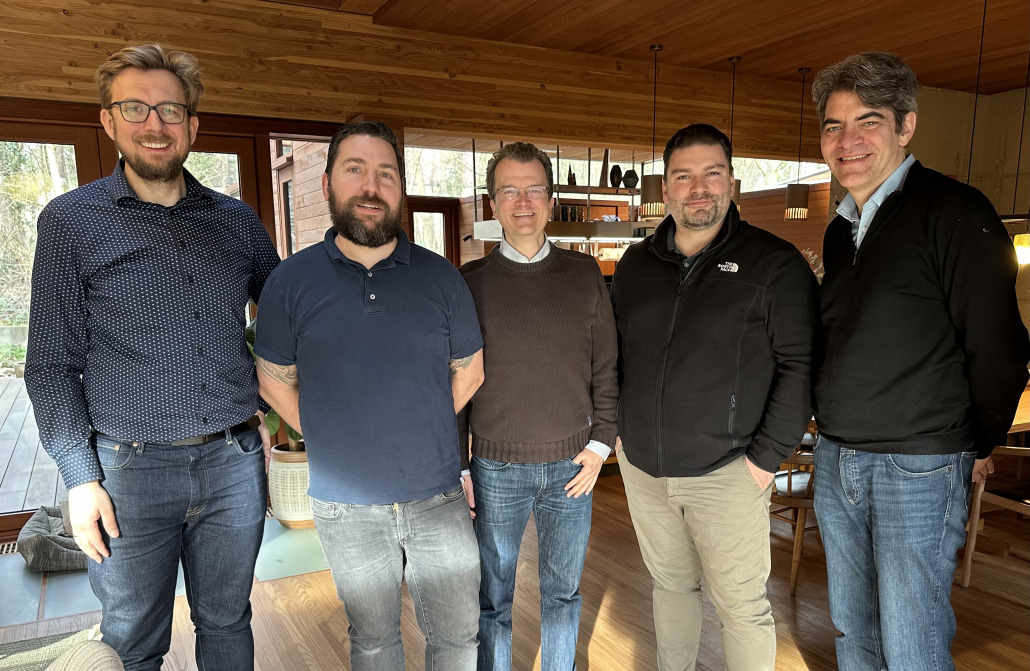
Recently, the team had the chance to visit the Triesch Residence and experience the building in use. After three years, owner Lars Triesch was more than happy with the experience of living in the building and with the high level of energy efficiency that has been achieved. Despite the open and lightweight structure with its slim walls, the heating system was only rarely required by the family.
The aesthetics of the design and its potential for future projects impressed the aerogel experts of aerogel-it GmbH and Kahnt & Tietze GmbH. The two companies recently signed a memorandum of understanding on collaborating on the combination of prefabrication technology and slim aerogel insulation. The visit convinced all parties that this technology combination makes sense.
View from the inside: The slim wall and pillars connected to the glass elements seem to be massive redwood but are hollow cassettes containing aerogel superinsulation (photo: Dirk Weinrich).The slim, lightweight redwood wall construction in the kitchen (photo: Dirk Weinrich).The slim, lightweight carbon concrete construction in the sitting area which contains a layer of aerogel superinsulation (photo: Dirk Weinrich).The project team visits the Triesch Residence three years after completion of the project (from left to right: Dr. Alexander Kahnt, Lars Triesch, Dr. Marc Fricke, Dr. Matthias Tietze, Dr. Dirk Weinrich; photo: Lars Triesch).
For more information on the Triesch Residence, see here.
For more information on lightweight construction with aerogels, contact us or Kahnt&Tietze GmbH.
https://aerogel-it.de/wp-content/uploads/2026/01/Triesch-Residence.jpg7311300dirk.weinrichhttps://aerogel-it.de/wp-content/uploads/2025/01/thumbnail_aero_white_transp-300x232.pngdirk.weinrich2026-01-26 11:12:582026-01-26 11:12:59Real-Life Example: The Triesch Residence, Berlin.
https://aerogel-it.de/wp-content/uploads/2025/01/thumbnail_aero_white_transp-300x232.png00dirk.weinrichhttps://aerogel-it.de/wp-content/uploads/2025/01/thumbnail_aero_white_transp-300x232.pngdirk.weinrich2026-01-26 11:11:492026-02-11 18:10:55Ask Dr. Marc with Frank Schätzing
https://aerogel-it.de/wp-content/uploads/2025/01/thumbnail_aero_white_transp-300x232.png00dirk.weinrichhttps://aerogel-it.de/wp-content/uploads/2025/01/thumbnail_aero_white_transp-300x232.pngdirk.weinrich2026-01-26 11:10:052026-01-27 16:54:42Erik and Finn join the aerogel-it R&D team
We may request cookies to be set on your device. We use cookies to let us know when you visit our websites, how you interact with us, to enrich your user experience, and to customize your relationship with our website.
Click on the different category headings to find out more. You can also change some of your preferences. Note that blocking some types of cookies may impact your experience on our websites and the services we are able to offer.
Essential Website Cookies
These cookies are strictly necessary to provide you with services available through our website and to use some of its features.
Because these cookies are strictly necessary to deliver the website, refusing them will have impact how our site functions. You always can block or delete cookies by changing your browser settings and force blocking all cookies on this website. But this will always prompt you to accept/refuse cookies when revisiting our site.
We fully respect if you want to refuse cookies but to avoid asking you again and again kindly allow us to store a cookie for that. You are free to opt out any time or opt in for other cookies to get a better experience. If you refuse cookies we will remove all set cookies in our domain.
We provide you with a list of stored cookies on your computer in our domain so you can check what we stored. Due to security reasons we are not able to show or modify cookies from other domains. You can check these in your browser security settings.
Other external services
We also use different external services like Google Webfonts, Google Maps, and external Video providers. Since these providers may collect personal data like your IP address we allow you to block them here. Please be aware that this might heavily reduce the functionality and appearance of our site. Changes will take effect once you reload the page.
Google Webfont Settings:
Google Map Settings:
Google reCaptcha Settings:
Vimeo and Youtube video embeds:
Privacy Policy
You can read about our cookies and privacy settings in detail on our Privacy Policy Page.