Since 2020, 𝐚𝐞𝐫𝐨𝐠𝐞𝐥-𝐢𝐭 and 𝐄𝐱𝐮𝐮𝐝 𝐈𝐧𝐜. have been working together on a shared ambition: to explore how bioaerogels can enable entirely new applications in fragrance and beauty.
It is a collaboration built on very different, but highly complementary expertise:
▶️ Exuud brings its vision for fragrance, formulation expertise, product development and access to the beauty market.
▶️ aerogel-it contributes the bioaerogel materials, process technology and know-how required to translate new materials from the laboratory towards scalable production.
Over six years of joint development, first ideas and material samples have evolved into 𝐒𝐨𝐥𝐢𝐪𝐚𝐢𝐫𝐞™, a new application platform based on highly porous, bio-based carrier materials.
For us as aerogel-it, this collaboration demonstrates something important about aerogels: their potential extends far beyond thermal insulation. Their unique pore structures can turn them into functional materials for storing and releasing liquids and active components – opening opportunities in entirely different industries.
But above all, this is a story about what can happen when two teams combine complementary technologies, remain curious and keep developing an idea together over many years.
We are proud of what we as aerogel-it have built with Exuud since 2020 – and of the next chapter that is now taking shape.
Our thanks go to Abhishek K Breja, Jesse Killion and the entire Exuud team for the collaboration, patience and trust.
https://aerogel-it.de/wp-content/uploads/2026/06/Markus-Teaser.png10801080nik.thoernerhttps://aerogel-it.de/wp-content/uploads/2025/01/thumbnail_aero_white_transp-300x232.pngnik.thoerner2026-06-22 16:41:092026-06-24 03:25:36Ask Dr. Marc with Markus Blazaizak
https://aerogel-it.de/wp-content/uploads/2026/06/CUBE-Stefan-Groschel-TU-Dresden.jpg15922384dirk.weinrichhttps://aerogel-it.de/wp-content/uploads/2025/01/thumbnail_aero_white_transp-300x232.pngdirk.weinrich2026-06-22 16:40:422026-06-24 07:54:11Application of the Month: Carbon Concrete and Aerogels
https://aerogel-it.de/wp-content/uploads/2026/06/Osna.png10801080nik.thoernerhttps://aerogel-it.de/wp-content/uploads/2025/01/thumbnail_aero_white_transp-300x232.pngnik.thoerner2026-06-22 16:40:182026-06-29 16:27:49aerogel-it at the “Building the Future” Exhibition at MIK Osnabrück
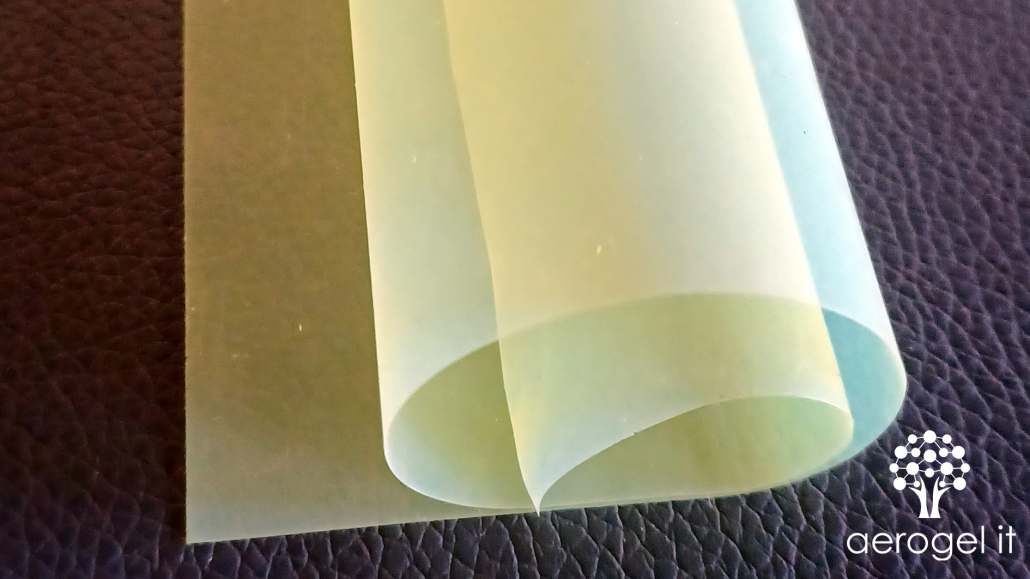
aerogel-it is expanding its aerogel material portfolio with a new product: ultrathin Polyimide Aerogel Film PIF.
This new material development combines two highly attractive material worlds: the temperature stability and robustness of polyimide with the low density and excellent thermal insulation performance of aerogel materials. The result is an advanced, lightweight aerogel film designed for applications where every millimetre matters.
Polyimide Aerogel Film PIF is currently available in very thin film thicknesses in the range of 0.1–0.3 mm. At the same time, the material offers a thermal conductivity of 0.020–0.025 W/(m·K) at 25°C, making it a promising candidate for compact thermal insulation concepts in demanding technical environments.
Why polyimide aerogel?
Polyimide is known for its robustness, temperature stability and chemical resistance. Aerogels, on the other hand, are valued for their low density and outstanding thermal insulation performance. Polyimide Aerogel Film PIF brings these properties together in a three-dimensional, cross-linked, mesoporous polymer network made of polyimide.
This combination opens up interesting possibilities for applications where conventional insulation materials are too thick, too heavy or not suitable for the technical environment.
Ultra-thin insulation for space-limited applications
In many modern applications, thermal management is becoming increasingly complex. Electronic devices are becoming smaller, systems are becoming more powerful, and available installation space is often extremely limited.
This is exactly where ultra-thin Polyimide Aerogel Film PIF can offer an interesting solution. With thicknesses currently in the range of 0.1–0.3 mm, the material is designed for ultra-thin thermal insulation layers that can be integrated into compact designs.
Potential use cases include:
Compact electronics
High-frequency and RF systems
Thermal barriers in confined spaces
Technical insulation layers for demanding environments
Applications where low weight and low thickness are critical
Thermal insulation performance
One of the key characteristics of Polyimide Aerogel Film PIF is its low thermal conductivity. According to the current technical datasheet, the material reaches a thermal conductivity of 0.020–0.025 W/(m·K) at 25°C.
This makes the material suitable for development projects where very thin insulation layers are required, but thermal performance remains important. In addition, the low density of the material supports lightweight design concepts.
Designed for demanding technical environments
Polyimide Aerogel Film PIF is being developed for applications that require more than only low thermal conductivity. The material also offers a combination of properties that can be relevant for demanding industrial and electronic applications.
Key material features include:
Ultra-thin thermal insulation layers
Low thermal conductivity
Low density
Low dielectric constant and dielectric loss
Low-loss insulation for high-frequency electronics
Thermal barriers for demanding environments
Dust-free handling
Easy integration
Temperature resistance
Fire resistance
Water and humidity resistance
Long-term robustness
The material also shows dielectric stability across a wide frequency range, making it particularly interesting for electronic and RF-related applications where thermal insulation and dielectric properties both play an important role.
A material for development partnerships
Polyimide Aerogel Film PIF is currently still in the R&D phase. This means that we are actively working on the further development of the material and are exploring suitable application areas together with partners, engineers and product developers.
We are especially interested in exchanging ideas with companies and development teams working on:
Compact electronic devices
RF and high-frequency systems
Advanced thermal management
Thin thermal barrier solutions
Lightweight insulation concepts
Next-generation technical insulation materials
At this stage, early application discussions are particularly valuable. They help us understand specific technical requirements and evaluate how Polyimide Aerogel Film PIF can be adapted or further developed for real-world use cases.
Let’s discuss your application
With Polyimide Aerogel Film PIF, aerogel-it is taking another step toward advanced aerogel-based solutions for technical applications.
If you are working on compact electronics, RF systems, thermal barriers or next-generation insulation challenges, we would be happy to exchange ideas with you.
Get in touch with us to discuss potential applications and development opportunities.
Our new ultrathin Polyimide Aerogel Film PIF
https://aerogel-it.de/wp-content/uploads/2026/05/Polyimide-aerogel-film-PIF-16-9.jpg10631890dirk.weinrichhttps://aerogel-it.de/wp-content/uploads/2025/01/thumbnail_aero_white_transp-300x232.pngdirk.weinrich2026-06-05 08:18:392026-06-05 08:19:41New aerogel material at aerogel-it: ultrathin Polyimide Aerogel Film PIF
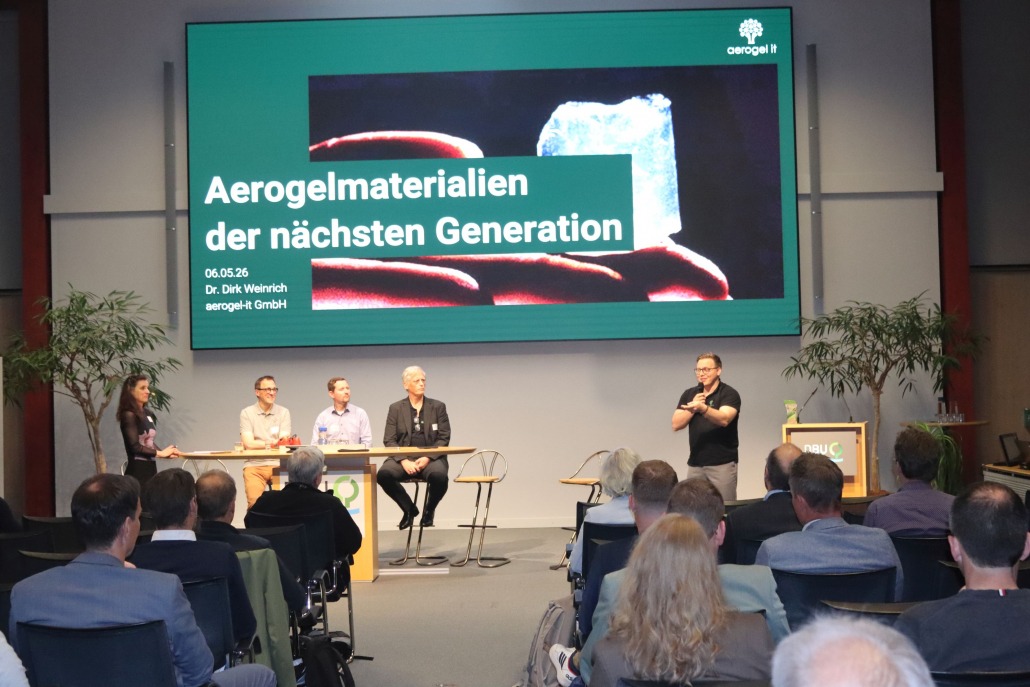
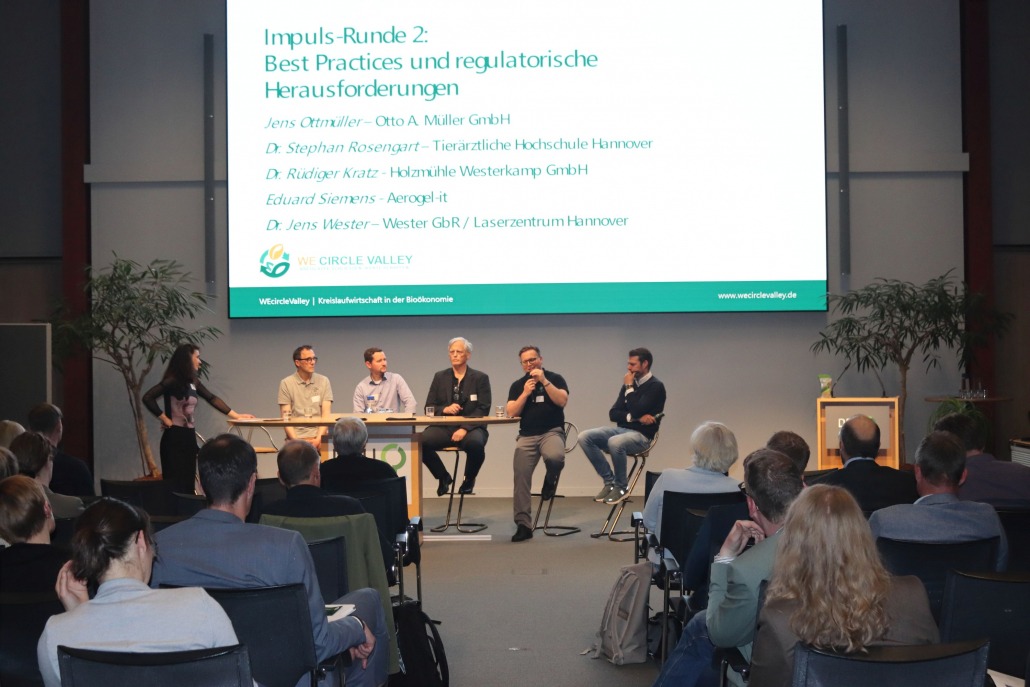
This week, we had the pleasure of participating in the WEcircleValley Kickoff Conference in Osnabrück. It was an inspiring event dedicated to accelerating innovation in circular economy, sustainable materials, and bio-based industrial solutions.
During the conference, our Sales Director Eduard presented the latest developments in our next-generation aerogel technologies, including biomineral silica aerogels and cellulose-based aerogels. These advanced materials demonstrate how high-performance insulation solutions can support the transition toward a more sustainable, resource-efficient, and circular economy.
Aerogels are known for their exceptional thermal insulation performance, lightweight structure, and versatility across industrial applications. By integrating renewable and bio-based raw materials into aerogel production, we aim to reduce environmental impact while maintaining the outstanding material properties required for modern energy-efficient applications.
One of the central themes throughout the conference was the transformation of side streams and renewable resources into valuable products and industrial applications. The discussions clearly showed that future sustainable industries will depend not only on technological innovation, but also on strong cooperation between businesses, research institutions, agriculture, policymakers, and public stakeholders.
We were particularly inspired by the conference’s strong emphasis on practical implementation and scalable solutions. From sustainable material development to energy efficiency and resource utilization, the event highlighted many promising approaches that can help accelerate the transition toward climate-friendly and circular industrial systems.
Events like this one hosted by WEcircleValley play an important role in connecting innovators across the entire value chain and creating opportunities for collaboration, knowledge exchange, and future partnerships.
We would like to sincerely thank WEcircleValley, the organizers, project partners, speakers, and all participants for creating such an open and forward-looking platform for innovation and collaboration. We look forward to continuing these discussions and contributing to the development of sustainable material technologies for the future.
Eduard Siemens presenting at WeCircleValley KickOff conferenceEduard Siemens discussing at WeCircleValley KickOff conference
https://aerogel-it.de/wp-content/uploads/2026/05/Eduard-WeCircleValley-1-scaled.jpg17072560dirk.weinrichhttps://aerogel-it.de/wp-content/uploads/2025/01/thumbnail_aero_white_transp-300x232.pngdirk.weinrich2026-05-11 15:55:012026-05-11 15:55:38WEcircleValley Kickoff Conference in Osnabrück
What happens when two outstanding minds join a team that is already moving at full speed?
At the start of 2026, we got to find out.
In January, we were very happy to welcome Finn and Erik to our R&D team. Since then, they’ve been doing fantastic work alongside Alberto—pushing our already high R&D velocity to new and unexpected levels, and delivering important results for our next-generation aerogel materials such as the biomineral silica aerogel and the cellulose bioaerogel as well as our process technology.
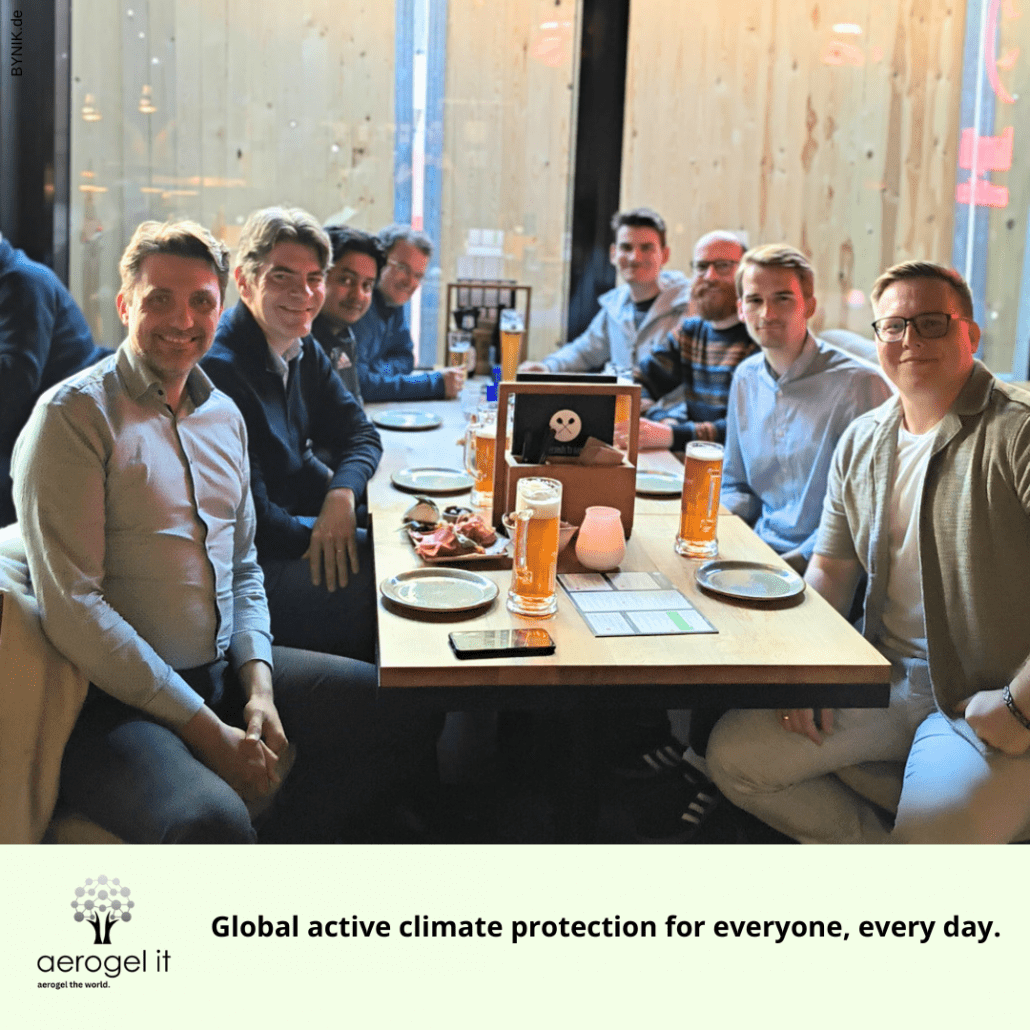
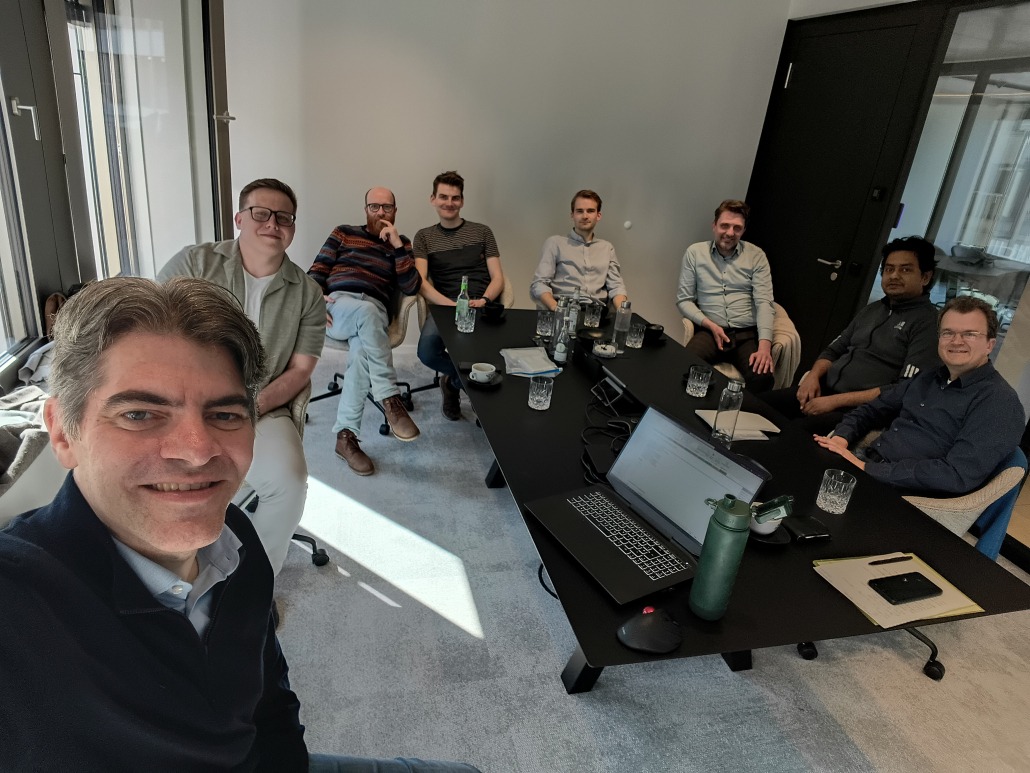
Of course, growth also brings complexity. Keeping everyone aligned and connected becomes more important than ever. That’s why we introduced quarterly in-person strategy team meetings (with dinner included) to stay in sync.
This week marked our first session at the end of Q1. Marc and Dirk shared updates on company strategy and direction, while the team contributed plenty of new ideas and fine-tuned ongoing workstreams. The verdict: a clear success—and definitely something we will continue.
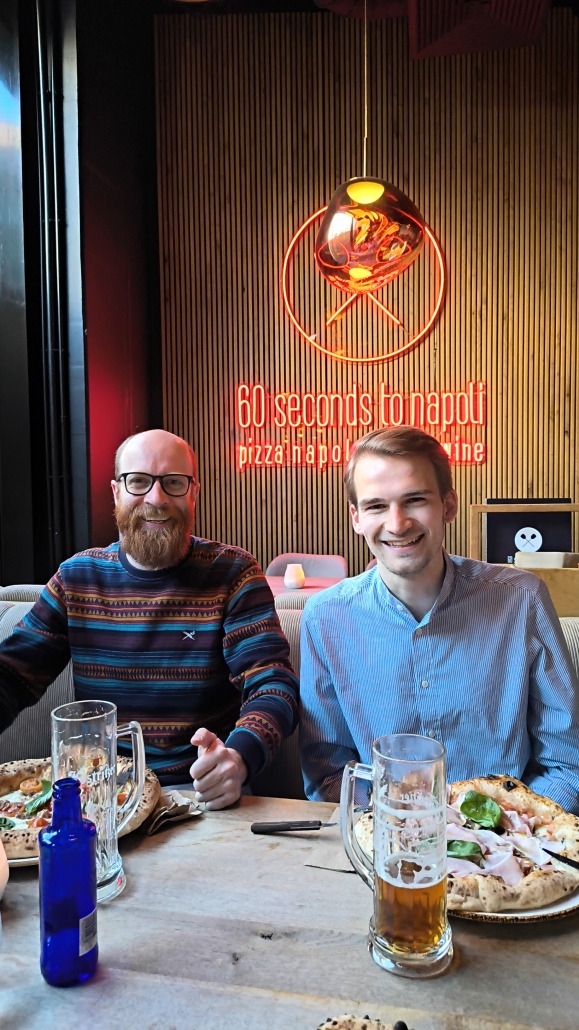
We wrapped up the day with an excellent dinner at 60s to Napoli downstairs—before catching the train back to Osnabrück (almost on time, which felt like a bonus).
A big thank you to Dr. Lutz Drallé and the team at LUPP + PARTNER for hosting us in their Hamburg office and taking such great care of us.
Team dinner at 60s to Napoli HH Q1 2026Strategy meeting Q1 2026 in HHFinn and Alberto at 60s to Napoli
https://aerogel-it.de/wp-content/uploads/2026/04/Team-dinner-at60s-to-Napoli-HH-Q1-2026.png10801080dirk.weinrichhttps://aerogel-it.de/wp-content/uploads/2025/01/thumbnail_aero_white_transp-300x232.pngdirk.weinrich2026-04-22 12:53:292026-04-22 12:53:30First strategy team meeting Q1 2026
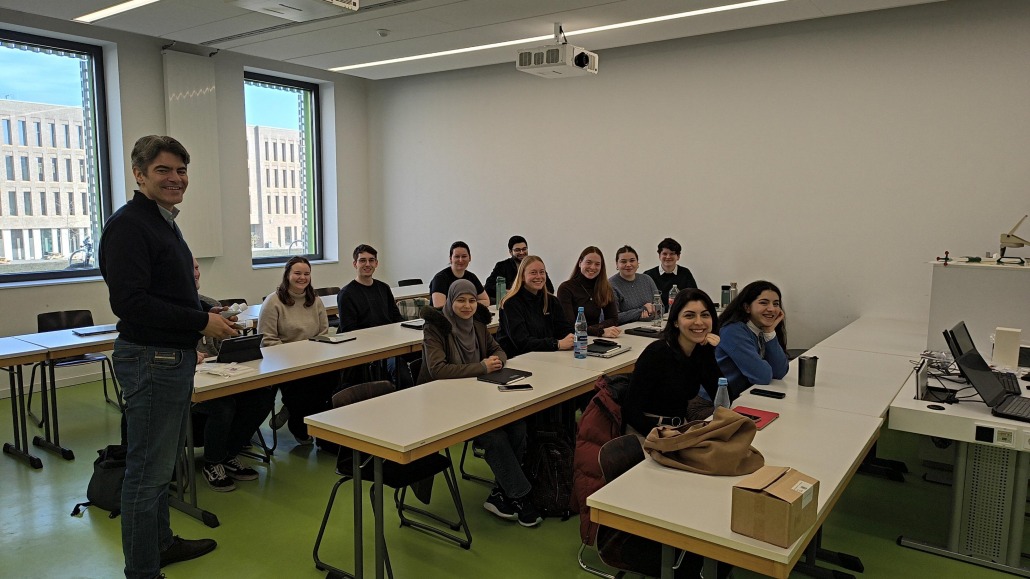
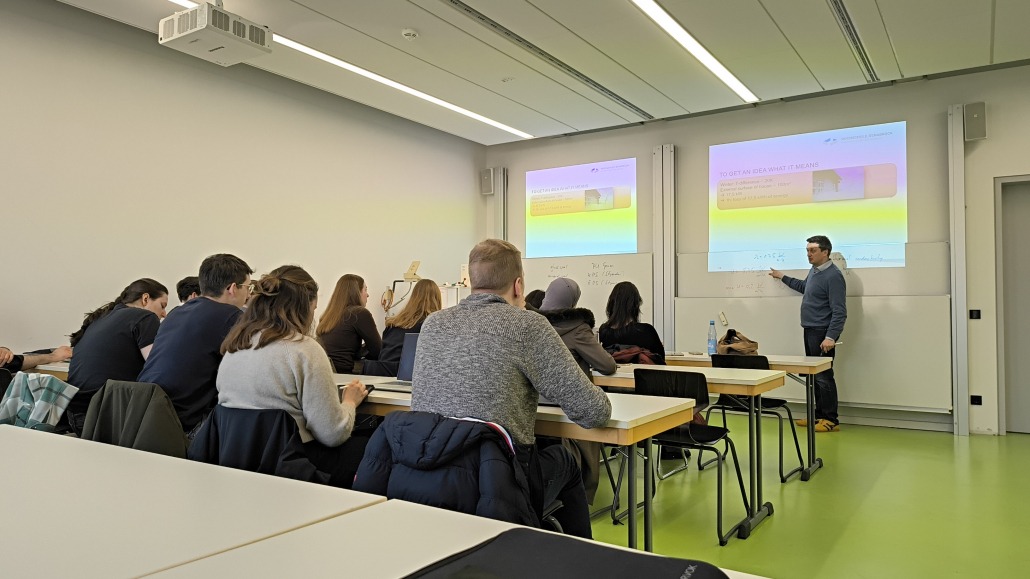
It doesn’t happen often that the team can step out of the day-to-day work to talk about what we do. And it was a real pleasure for Dirk to take this time to share with a group of master students what makes aerogels such a fascinating class of materials.
The focus of this session which also included polymer foams and other materials was energy efficiency. This is a field that aerogels as excellent thermal insulators feel right at home in. From heat shields for electric vehicle batteries to energy-efficient building renovation, aerogels are already enabling real-world solutions. But beyond that there is much more – including completely new applications and aerogel materials such as biomineral silica aerogels and bioaerogels that we as aerogel-it are working on.
What stood out most, though, was the reminder of how fortunate we as aerogel-it are: working every day on such an advanced technology we truly believe in. And pushing the boundaries every day with the great team that we as a company have grown into. Our passion for aerogels has kept us going for more than a decade. And there is still so much to explore and value to create.
Looking forward to what the next decades will bring!
Dirk and master students at Hochschule OsnabrückProf. Dr. Markus Susoff and master students at Hochschule Osnabrück
https://aerogel-it.de/wp-content/uploads/2026/04/Dirk-at-HS-OS-scaled.jpg14402560dirk.weinrichhttps://aerogel-it.de/wp-content/uploads/2025/01/thumbnail_aero_white_transp-300x232.pngdirk.weinrich2026-04-13 09:02:562026-04-13 09:03:54Talk on Aerogel Materials at Hochschule Osnabrück
Start of the C-Factory project – a major milestone for climate-friendly construction!
C-Factory is designed to become the worldwide first carbon concrete plant for CO2-storing prefab components, backed by around EUR 14 million in funding from Germany’s Federal Ministry for Economic Affairs and Energy and running through the end of 2029.
The project builds on two decades of research and practical testing, including the Carbon Concrete CUBE at Technische Universität Dresden, the worldwide first building made of carbon concrete.
A long-standing collaboration
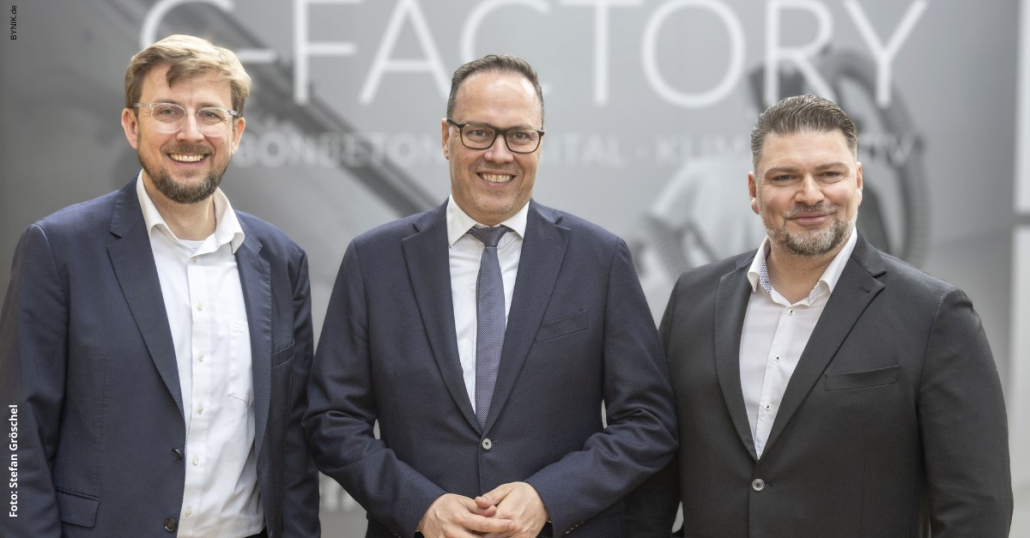
As aerogel-it, we are especially proud of our long-standing collaboration with Kahnt & Tietze GmbH who are spearheading this effort (in the photo below with Saxonian State Minister Dirk Panter). For many years, we have worked together with them to minimize wall thickness through the combination of space-saving carbon concrete and aerogel high-performance thermal insulation e.g. SLENTITE and silica aerogel blankets in the Carbon Concrete CUBE, and in several public funded projects such as BIOVIPWALL. This powerful combination helps create slimmer, lighter and more durable building envelopes with lower material use, lower transport and installation effort, and improved lifecycle performance.
What it means for sustainable construction
What makes C-Factory so exciting is its potential to take sustainable construction another decisive step forward:
1️⃣ Carbon concrete already enables significant savings in cement, sand and gravel because carbon reinforcement does not corrode and allows much slimmer components. 2️⃣ In combination with CO2-mineralized aggregates and additional CO2-storing materials, future components are intended to become carbon stores themselves. 3️⃣ Paired with aerogel high-performance insulation, this approach unlocks even greater potential to drastically reduce wall thickness while maximizing usable space and energy efficiency.
Congratulations to Alexander Kahnt, Matthias Tietze and the entire team, as well as the partners from TU Dresden, HTWK Leipzig and the wider C3 ecosystem, on bringing a technology from research and pilot projects into industrial reality!
We are excited to see the impact C-Factory will have on resource efficiency, climate protection and the future of construction!
Kahnt & Tietze with Saxonian Minister of State Dirk Panter (photo Stefan Gröschel)
https://aerogel-it.de/wp-content/uploads/2026/04/C-Factory.jpg6271200dirk.weinrichhttps://aerogel-it.de/wp-content/uploads/2025/01/thumbnail_aero_white_transp-300x232.pngdirk.weinrich2026-04-02 14:12:302026-04-02 14:12:31Start of C-Factory Project
https://aerogel-it.de/wp-content/uploads/2026/03/IMG_20251112_122946-scaled.jpg14402560nik.thoernerhttps://aerogel-it.de/wp-content/uploads/2025/01/thumbnail_aero_white_transp-300x232.pngnik.thoerner2026-03-09 08:07:062026-05-13 17:29:12One Year of AEROLIGNOCEL: A Milestone in Bio-Based High-Performance Aerogels
We may request cookies to be set on your device. We use cookies to let us know when you visit our websites, how you interact with us, to enrich your user experience, and to customize your relationship with our website.
Click on the different category headings to find out more. You can also change some of your preferences. Note that blocking some types of cookies may impact your experience on our websites and the services we are able to offer.
Essential Website Cookies
These cookies are strictly necessary to provide you with services available through our website and to use some of its features.
Because these cookies are strictly necessary to deliver the website, refusing them will have impact how our site functions. You always can block or delete cookies by changing your browser settings and force blocking all cookies on this website. But this will always prompt you to accept/refuse cookies when revisiting our site.
We fully respect if you want to refuse cookies but to avoid asking you again and again kindly allow us to store a cookie for that. You are free to opt out any time or opt in for other cookies to get a better experience. If you refuse cookies we will remove all set cookies in our domain.
We provide you with a list of stored cookies on your computer in our domain so you can check what we stored. Due to security reasons we are not able to show or modify cookies from other domains. You can check these in your browser security settings.
Other external services
We also use different external services like Google Webfonts, Google Maps, and external Video providers. Since these providers may collect personal data like your IP address we allow you to block them here. Please be aware that this might heavily reduce the functionality and appearance of our site. Changes will take effect once you reload the page.
Google Webfont Settings:
Google Map Settings:
Google reCaptcha Settings:
Vimeo and Youtube video embeds:
Privacy Policy
You can read about our cookies and privacy settings in detail on our Privacy Policy Page.