
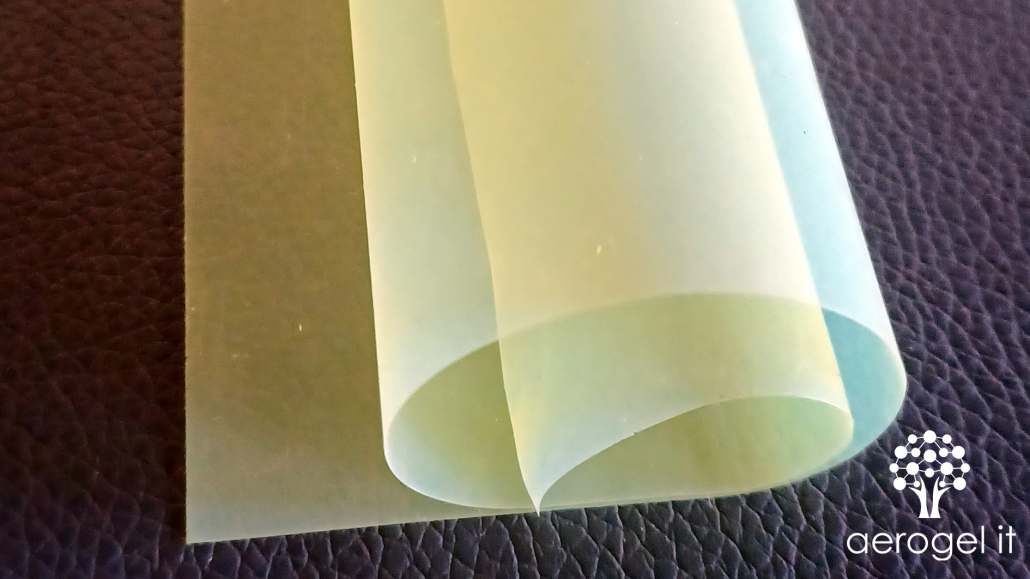
aerogel-it is expanding its aerogel material portfolio with a new product: ultrathin Polyimide Aerogel Film PIF.
This new material development combines two highly attractive material worlds: the temperature stability and robustness of polyimide with the low density and excellent thermal insulation performance of aerogel materials. The result is an advanced, lightweight aerogel film designed for applications where every millimetre matters.
Polyimide Aerogel Film PIF is currently available in very thin film thicknesses in the range of 0.1–0.3 mm. At the same time, the material offers a thermal conductivity of 0.020–0.025 W/(m·K) at 25°C, making it a promising candidate for compact thermal insulation concepts in demanding technical environments.
Why polyimide aerogel?
Polyimide is known for its robustness, temperature stability and chemical resistance. Aerogels, on the other hand, are valued for their low density and outstanding thermal insulation performance. Polyimide Aerogel Film PIF brings these properties together in a three-dimensional, cross-linked, mesoporous polymer network made of polyimide.
This combination opens up interesting possibilities for applications where conventional insulation materials are too thick, too heavy or not suitable for the technical environment.
Ultra-thin insulation for space-limited applications
In many modern applications, thermal management is becoming increasingly complex. Electronic devices are becoming smaller, systems are becoming more powerful, and available installation space is often extremely limited.
This is exactly where ultra-thin Polyimide Aerogel Film PIF can offer an interesting solution. With thicknesses currently in the range of 0.1–0.3 mm, the material is designed for ultra-thin thermal insulation layers that can be integrated into compact designs.
Potential use cases include:
- Compact electronics
- High-frequency and RF systems
- Thermal barriers in confined spaces
- Technical insulation layers for demanding environments
- Applications where low weight and low thickness are critical
Thermal insulation performance
One of the key characteristics of Polyimide Aerogel Film PIF is its low thermal conductivity. According to the current technical datasheet, the material reaches a thermal conductivity of 0.020–0.025 W/(m·K) at 25°C.
This makes the material suitable for development projects where very thin insulation layers are required, but thermal performance remains important. In addition, the low density of the material supports lightweight design concepts.
Designed for demanding technical environments
Polyimide Aerogel Film PIF is being developed for applications that require more than only low thermal conductivity. The material also offers a combination of properties that can be relevant for demanding industrial and electronic applications.
Key material features include:
- Ultra-thin thermal insulation layers
- Low thermal conductivity
- Low density
- Low dielectric constant and dielectric loss
- Low-loss insulation for high-frequency electronics
- Thermal barriers for demanding environments
- Dust-free handling
- Easy integration
- Temperature resistance
- Fire resistance
- Water and humidity resistance
- Long-term robustness
The material also shows dielectric stability across a wide frequency range, making it particularly interesting for electronic and RF-related applications where thermal insulation and dielectric properties both play an important role.
A material for development partnerships
Polyimide Aerogel Film PIF is currently still in the R&D phase. This means that we are actively working on the further development of the material and are exploring suitable application areas together with partners, engineers and product developers.
We are especially interested in exchanging ideas with companies and development teams working on:
- Compact electronic devices
- RF and high-frequency systems
- Advanced thermal management
- Thin thermal barrier solutions
- Lightweight insulation concepts
- Next-generation technical insulation materials
At this stage, early application discussions are particularly valuable. They help us understand specific technical requirements and evaluate how Polyimide Aerogel Film PIF can be adapted or further developed for real-world use cases.
Let’s discuss your application
With Polyimide Aerogel Film PIF, aerogel-it is taking another step toward advanced aerogel-based solutions for technical applications.
If you are working on compact electronics, RF systems, thermal barriers or next-generation insulation challenges, we would be happy to exchange ideas with you.
Get in touch with us to discuss potential applications and development opportunities.
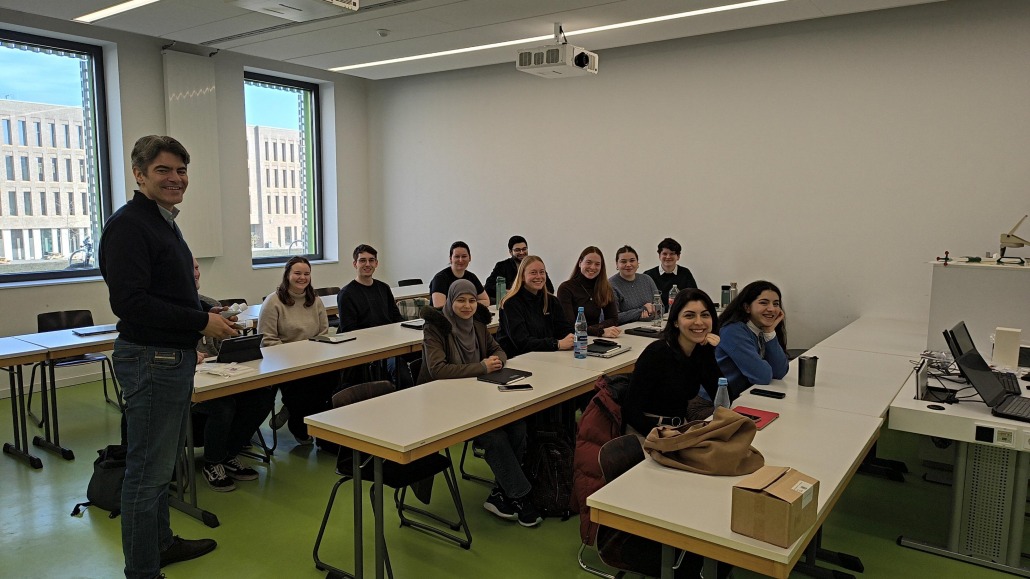
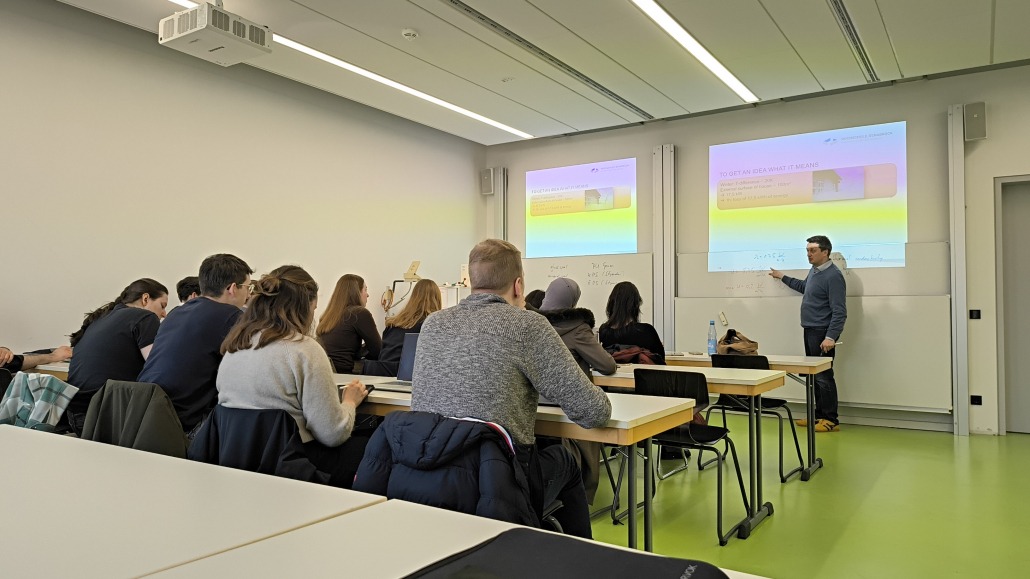
Recently, Dirk had the opportunity to give a talk on aerogel materials at Hochschule Osnabrück. This talk was part of the lecture series “Materials in Future Technologies” by Prof. Dr. Markus Susoff and Prof. Dr. Svea Petersen. 👩🎓👨🎓
It doesn’t happen often that the team can step out of the day-to-day work to talk about what we do. And it was a real pleasure for Dirk to take this time to share with a group of master students what makes aerogels such a fascinating class of materials.
The focus of this session which also included polymer foams and other materials was energy efficiency. This is a field that aerogels as excellent thermal insulators feel right at home in. From heat shields for electric vehicle batteries to energy-efficient building renovation, aerogels are already enabling real-world solutions. But beyond that there is much more – including completely new applications and aerogel materials such as biomineral silica aerogels and bioaerogels that we as aerogel-it are working on.
What stood out most, though, was the reminder of how fortunate we as aerogel-it are: working every day on such an advanced technology we truly believe in. And pushing the boundaries every day with the great team that we as a company have grown into. Our passion for aerogels has kept us going for more than a decade. And there is still so much to explore and value to create.
Looking forward to what the next decades will bring!
Start of the C-Factory project – a major milestone for climate-friendly construction!
C-Factory is designed to become the worldwide first carbon concrete plant for CO2-storing prefab components, backed by around EUR 14 million in funding from Germany’s Federal Ministry for Economic Affairs and Energy and running through the end of 2029.
The project builds on two decades of research and practical testing, including the Carbon Concrete CUBE at Technische Universität Dresden, the worldwide first building made of carbon concrete.
A long-standing collaboration
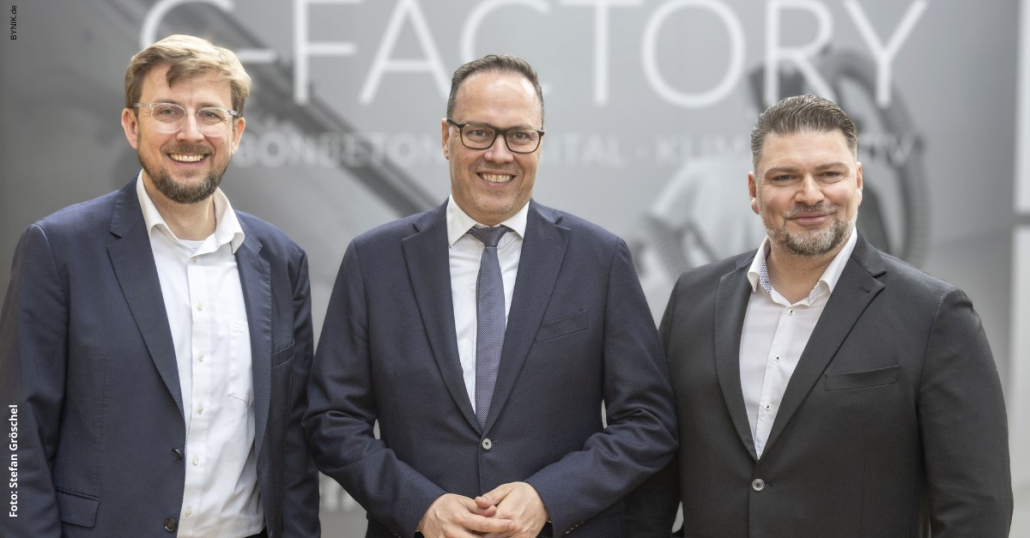
As aerogel-it, we are especially proud of our long-standing collaboration with Kahnt & Tietze GmbH who are spearheading this effort (in the photo below with Saxonian State Minister Dirk Panter). For many years, we have worked together with them to minimize wall thickness through the combination of space-saving carbon concrete and aerogel high-performance thermal insulation e.g. SLENTITE and silica aerogel blankets in the Carbon Concrete CUBE, and in several public funded projects such as BIOVIPWALL. This powerful combination helps create slimmer, lighter and more durable building envelopes with lower material use, lower transport and installation effort, and improved lifecycle performance.
What it means for sustainable construction
What makes C-Factory so exciting is its potential to take sustainable construction another decisive step forward:
1️⃣ Carbon concrete already enables significant savings in cement, sand and gravel because carbon reinforcement does not corrode and allows much slimmer components.
2️⃣ In combination with CO2-mineralized aggregates and additional CO2-storing materials, future components are intended to become carbon stores themselves.
3️⃣ Paired with aerogel high-performance insulation, this approach unlocks even greater potential to drastically reduce wall thickness while maximizing usable space and energy efficiency.
Congratulations to Alexander Kahnt, Matthias Tietze and the entire team, as well as the partners from TU Dresden, HTWK Leipzig and the wider C3 ecosystem, on bringing a technology from research and pilot projects into industrial reality!
We are excited to see the impact C-Factory will have on resource efficiency, climate protection and the future of construction!
The buildings in Europe are an energy problem — and at the same time a huge opportunity. 75% of the existing building stock is considered energy inefficient. At the same time, EPBD regulations, the EU taxonomy, and rising financing costs are increasing the pressure on property owners.
Energy-efficient renovation is no longer optional. It has become a necessity — both ecologically and economically.
External insulation (EIFS or ETICS) is the most wide-spread solution. But what happens when external insulation is not possible?
When the façade is off-limits
❌ Heritage protection.
❌ Limited property boundaries.
❌ Complex ownership structures in multi-unit buildings
In practice, energy optimization often fails because of the building envelope.
This is where interior insulation comes into play. For a long time, however, it had a difficult reputation:
⚠️ Interventions in living spaces
⚠️ Loss of usable floor area
⚠️ Building physics risks such as condensation and mold
But modern materials such as aerogels are changing the rules of the game.
Aerogel: Maximum performance with minimal thickness
Aerogels are among the most advanced insulation materials in the world. With their extremely low thermal conductivity, they allow significantly thinner insulation layers while delivering the same — or even better — performance than conventional materials.
In practical terms, this means:
✅ Less loss of interior space
✅ High energy efficiency even with just 1–2 cm of insulation
✅ Significantly reduced heat loss
✅ Better compatibility with sensitive building structures
When it comes to interior insulation, every centimeter matters. The first millimeters deliver the largest effect — and this is exactly where aerogels excel.
Three solution approaches for different requirements
Aerogel insulating render
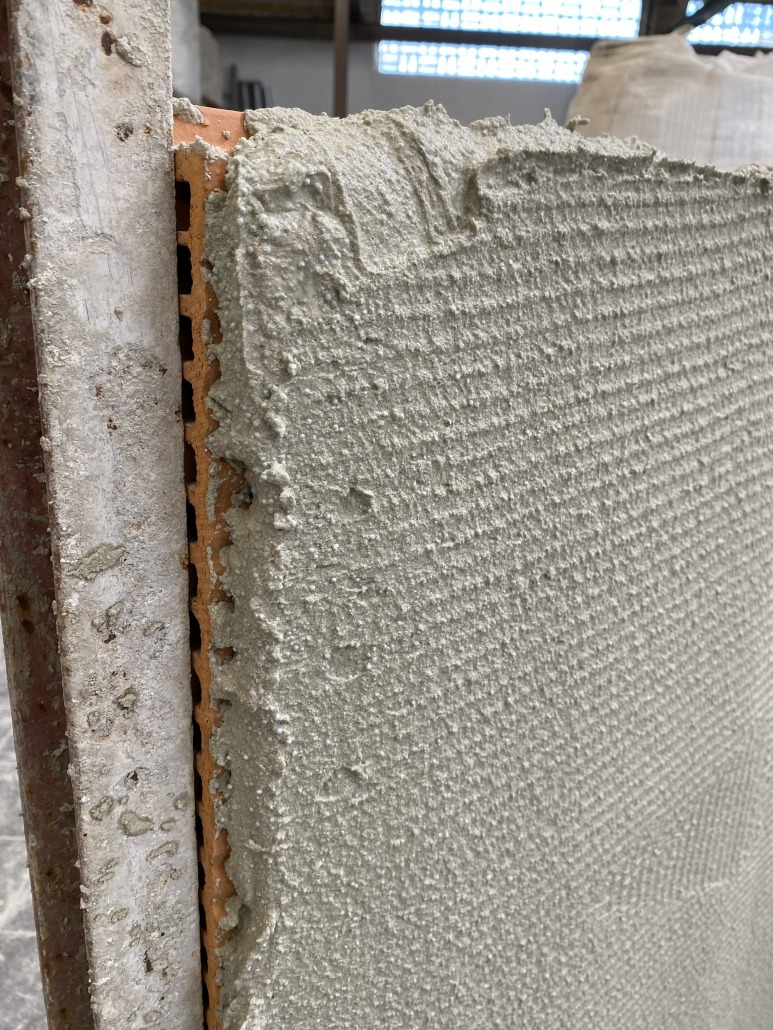
Ideal for uneven substrates and heritage buildings. Aerogel insulation render is easy and fast to apply e.g. using render spraying machines and highly effective. This is why it is becoming a very popular solution for energetic renovation. We are developing solutions based on our highly innovative biomineral silica aerogel. Recent pilot tests were positive.
Polymer aerogel panels
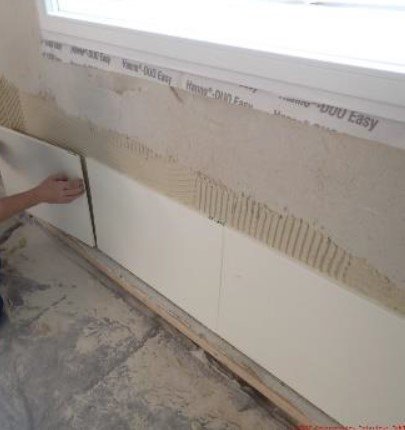
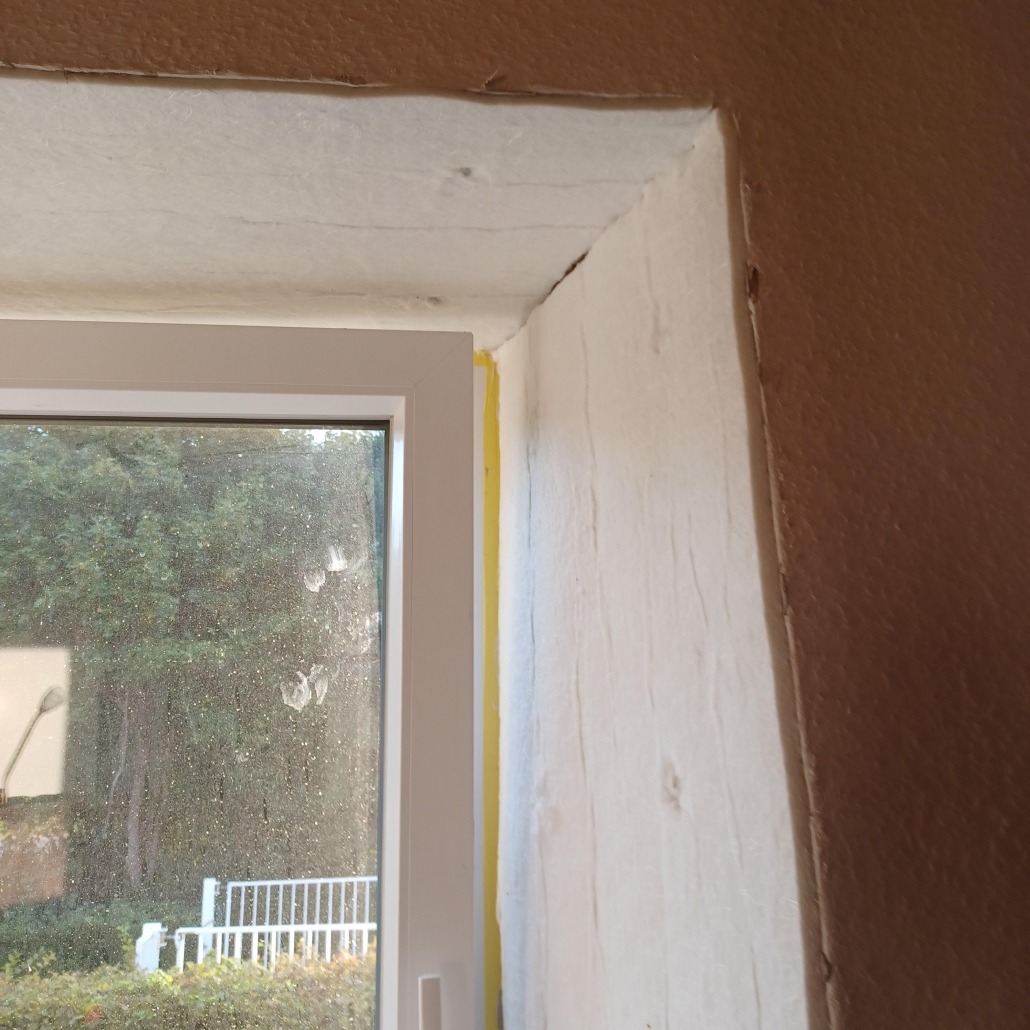
Our polyurethane aerogel SLENTITE is robust, easy to handle, and capillary-active — particularly suitable for demanding detail areas such as window reveals. A wide range of projects have benefitted from the problem-solving power of SLENTITE.
Silica aerogel solutions
Silica aerogel blankets such as Oryza BGT have extremely low thermal conductivity, hydrophobic properties, and the highest fire protection class — especially effective in multilayer constructions. Silica aerogel blankets can be used as is or as multilayer boards.
If you would like to discuss the right solution for your project, please get in touch with us.
Renovation as a value strategy
Buildings that remain unrenovated increasingly risk declining asset values and higher financing costs.
Energy-efficient renovation is therefore not only about climate protection — it is also about portfolio management.
Interior insulation with high-performance materials opens up new opportunities for buildings that were previously considered difficult to renovate.
The existing European building stock represents the largest energy efficiency project of our time.
And the technology to achieve it is already available.

Since January 2025, Eduard has been part of our team as Director of Sales. Together with our CEO Marc, he is driving our aerogel business forward.
Why Champions League?
Because this is not about standard products. Rather, we deal with innovative high-performance materials. It is a highly international market that is technologically demanding and the products require in-depth explanation and UVP analysis. And although aerogels have been present in the market for more than 30 years, they are still largely unknown. So a big part of our work is making the world more aware of aerogel materials – in addition to explaining how we improve them.
Anyone who wants to succeed in such an environment must understand their product in detail, be able to communicate it, read the market, and continuously learn through direct exchange with customers. Eduard excels at all of this.
Over the past twelve months, this has specifically meant:
1️⃣ Finding new partners and applications for Oryza BGT (silica aerogel blanket) and SAP (silica aerogel granules)
2️⃣ Developing the market for our next generation products including our next-generation biomineral aerogel LSMA, a unique silica-biopolymer hybrid aerogel material with superior properties
3️⃣ Rolling out global development of a new segment – aerogel coatings. We like this product class a lot. More to come soon – stay tuned.
Above all, one thing is crucial for us at aerogel-it: honest feedback from real-world applications. That is exactly where it is decided who plays in the Champions League – and who does not.
We are glad to have you on board, dear Eduard.
If you have any questions about materials, procurement, or costs, you can reach Eduard via our contact options.

Funded by

We support
