
Carbon concrete and aerogels demonstrate how building envelopes can become slimmer, lighter and more resource-efficient. Two projects in Dresden and Leipzig show how research can evolve into practical applications for residential construction.
In the construction industry, just a few centimetres can make a significant difference. Thick walls take up space, require more material, add weight and often limit architectural freedom.
Carbon concrete addresses exactly this challenge. Because the reinforcement does not corrode, it requires far less concrete cover. This allows concrete shells to be designed much more slenderly. The aerogel-it partners Kahnt & Tietze GmbH are pioneers of this new construction technology.
Aerogels complement this structure by providing exceptionally high thermal performance with minimal material thickness. The result is a building envelope that is thinner, lighter and more efficient. This is not only technically compelling, but economically relevant as well: more usable floor space, lower material consumption, reduced transport volume and weight, and greater freedom in architectural design.
From the Carbon Concrete CUBE in Dresden to the planned LE11 project in Leipzig, these examples show how research and flagship projects can lead to concrete solutions for residential construction.
For aerogel-it, this is where the real potential lies: aerogels are not considered as an isolated specialist material, but as an integral part of a new, industrially manufacturable wall system.
Build slimmer. Insulate better. Use resources more responsibly.
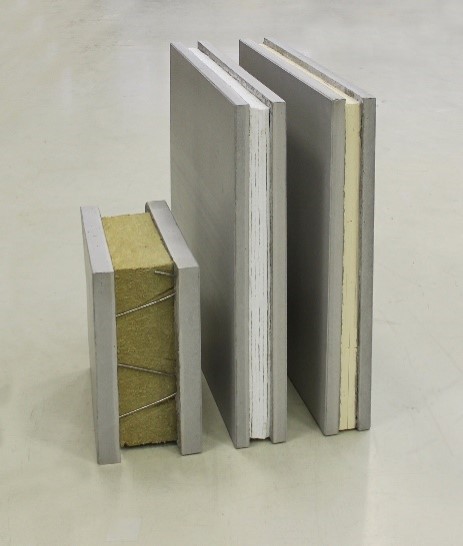
Conventional insulated wall (left) compared to aerogel insulated carbon-reinforced concrete wall (right).
With carbon-reinforced concrete, wall thickness can be strongly reduced. This means less material to manufacture and lower weight to handle which translates to slimmer, lightweight structures and reduced CO2 emissions.
Aerogel insulation enables thin, space-saving insulation. When the thin carbon concrete layer and the thin aerogel layer are combined, an amazingly thin wall design results which enables maximum useable space.
The CUBE in Dresden
The CUBE is widely described as the worldwide first building made of carbon concrete and was developed as a lighthouse project of the C³ – Carbon Concrete Composite research program.
In the BOX element of the building, carbon concrete shells and high-performance aerogel insulation were combined in a very thin wall system. The BOX walls used double-wall elements with carbon fiber-reinforced inner and outer shells and a high-performance aerogel insulation layer. Reports on the CUBE describe wall thicknesses of only 27 cm, around one third thinner than comparable conventional constructions, enabled by a sandwich structure using carbon concrete together with the aerogel insulation materials polyurethane aerogel boad SLENTITE and silica aerogel blanket SLENTEX.
The CUBE proved that aerogel insulation can be integrated into carbon concrete wall concepts at building scale. It also confirmed the core logic of the system: carbon concrete reduces the structural thickness, aerogels reduce the insulation thickness, and prefabrication turns both into reproducible construction elements.
The LE11 project in Leipzig
The LE11 project in Leipzig marks the next upcoming major milestone. Kahnt & Tietze have been designing a multi-apartment building based on carbon concrete which includes aerogel insulation for slim wall design. The building permit was issued in 2026, construction work has started, and the prefab wall panels are now being produced.
Once completed, LE11 is expected to become the first carbon concrete apartment building worldwide. This distinction matters because it moves the technology beyond individual demonstrations and single-family or experimental buildings toward the type of construction that cities urgently need: multi-apartment housing with high energy performance, efficient use of space and lower material intensity.
In LE11, the slim wall concept has a clear economic and architectural logic. Every centimeter saved in the exterior wall can contribute to more usable interior area. Lower wall weight can reduce transport and handling effort. Prefabricated panels can shorten construction time and improve production quality. At the same time, thinner walls can make the building look less massive and more refined, an important point for urban residential architecture.
The project also illustrates why partnerships are essential. Carbon concrete, aerogel insulation and prefab production each require specialist knowledge. Their value emerges when they are designed as one system: reinforcement, concrete shells, insulation layer, thermal bridges, joints, approvals, acoustic performance, fire considerations, production processes and installation details all have to work together.
Are you developing new solutions for high-performance building envelopes?
Let us explore how aerogels can become part of your wall or façade system. Contact us!
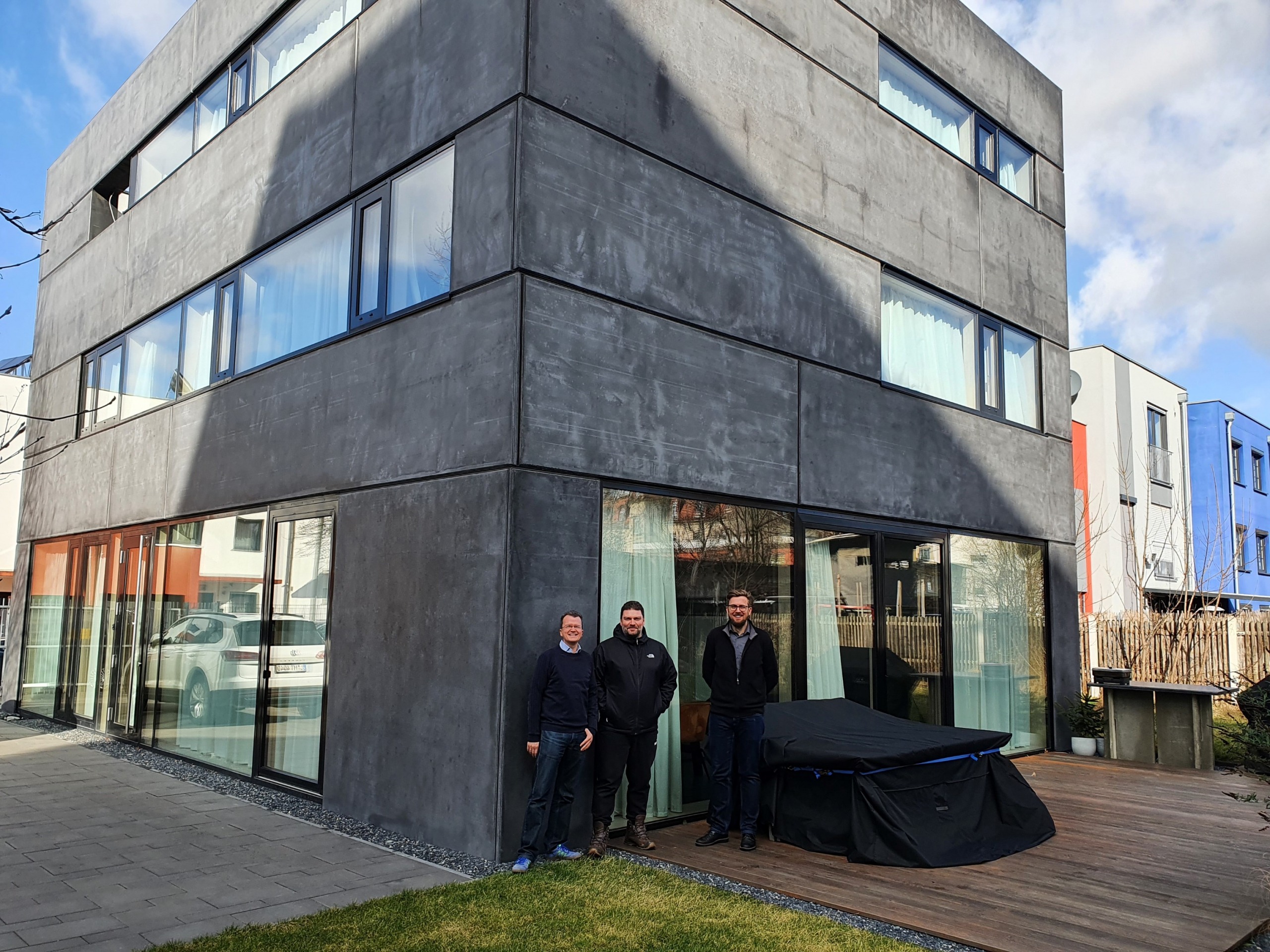
The Tietze Haus, one of the first residential buildings with carbon-reinforced concrete.


